For thousands of servicemen from all over the world who found themselves passing through New York City during World War II, the Stage Door Canteen was a magical place. You were treated like royalty when you walked through the door.
There was free food and top-notch entertainment from the biggest stars of radio, Broadway, and Hollywood. And best of all, there were scores of pretty young women falling all over themselves to dance with you or sit with you to share a few moments of conversation.
The purpose of the Stage Door Canteen was to provide servicemen, who might be returning from or heading into combat a place where they could relax and enjoy themselves. Except for the fact that no liquor was served and patrons didn’t have to pay for anything, the canteen was like a high-class nightclub with top-tier entertainment.
And from the perspective of the visiting servicemen, the best part was that you didn’t have to find a girl to take to the club – they were already there waiting for you and would even seek you out.
A Place Where Everyone Was Accepted, Regardless of Background
It didn’t matter where you came from. As long as you were an enlisted soldier or sailor or airman (no officers allowed) in the armed services of any of the “United Nations,” you were welcome. So, on any given night you could see vivacious young hostesses dancing or chatting with Brits or Frenchmen or Greeks or Americans.
And in the canteen, unlike almost anywhere else in the United States during that era, the term “Americans” included African Americans.
Almost two centuries after it occurred, Henry Brown’s escape from slavery before the Civil War is still celebrated as an inspiring example of what ingenuity, audacity, and faith can accomplish even in desperate circumstances. This is the story of how a hopeless slave took his life into his own hands and became an celebrated symbol of freedom, even to this day.
Henry Brown’s Triumphant Start of a New Life
Early on the morning of March 24, 1849, a box was delivered to 107 North Fifth Street in Philadelphia. These were the offices of the Pennsylvania Anti-Slavery Society. Several members of that organization had gathered that Saturday morning, anxiously awaiting the arrival of this package that had been shipped the day before from Richmond, Virginia.
When the box had been brought in and the doors of the room locked so that there would be no untimely interruptions, one of the waiting men did something strange. Leaning over the box, he tapped on it and quietly asked, “Is all right within?” Even more strangely, a voice replied from inside the box, “All right.”
Within a few minutes, the box was opened, and its contents were revealed. He was an African-American man in his early 30s by the name of Henry Brown. And he had just succeeded in escaping from slavery by shipping himself as freight to this city in the free state of Pennsylvania.
In honor of his very creative but extremely dangerous feat, he would forever after be known as Henry “Box” Brown.
Once out of his box, Henry Brown had a mesmerizing story to tell.
Henry Brown’s Life As a Virginia Slave
Henry Brown was born in 1815 or 1816 in Louisa County, Virginia. His first owner was former Richmond mayor, John Barret. As a slaveholder, Barret was atypical. He treated his slaves much better than was the norm, so much so that Brown described him in his autobiography as “uncommonly kind,” adding wryly that “even a slaveholder may be kind.”
When Barret lay dying, he sent for Brown and his mother. They came, as Brown says, “with beating hearts and highly elated feelings.” Because of the kind treatment his family had always received from their enslaver—and especially in light of the fact that Barret’s son Charles, impressed with the evils of slavery, had at one time emancipated about 40 of his slaves—Henry fully expected Barret to announce that he was setting the Brown family free. Instead, Barret simply told Henry that he would now be owned by his son William, and urged him to be obedient to his new enslaver.
Barret probably felt he had done all he could for Henry, short of freeing him. He extracted a promise from William that he would treat Henry kindly, and never have him whipped. William was faithful to that promise. Henry was sure that there were many times when only William’s insistent instructions to the overseer that he be treated well saved him from the lash.
What Barret did not consider, as it seemed slaveholders almost never did, was that in dividing the enslaved people as an inheritance among his sons, he was ripping apart a family. Members of the Brown family were given to each of the four Barret sons.
Even though Henry’s mother and sister joined him as part of William’s inheritance, they were ultimately separated by Henry being sent to work in a tobacco factory in Richmond. He was then about 15 years of age.
In 1836, as he entered his twenties, Henry fell in love with a young woman named Nancy. She was enslaved by Mr. Leigh, a bank clerk. Since slave marriages required the enslavers’ permission, Henry went to his own master and to Mr. Leigh to ask not only that he and Nancy be allowed to marry, but also for assurances that they would not be sold away from one another.
Mr. Leigh was particularly strong in his commitment. Henry recalled that “He promised faithfully that he would not sell her, and pretended to entertain an extreme horror of separating families.” Secure in that promise, Henry and his bride were able to set up housekeeping together.
But true to what Henry had come to expect from slaveholders, it was not more than a year after their marriage that Mr. Leigh broke his promise and sold Nancy.
This sale, and another that eventually followed, were to enslavers who lived in Richmond, and Henry and Nancy were able to maintain their family despite these upheavals. They had three children together and were expecting their fourth when the long feared blow finally struck them.
Another Family Torn Apart
On that day in 1848, Henry left home, as usual, to go to work. His autobiography recounts the horrific news that was soon brought to him:
“I had not been many hours at my work, when I was informed that my wife and children were taken from their home, sent to the auction mart and sold, and then lay in prison ready to start away the next day for North Carolina with the man who had purchased them. I cannot express, in language, what were my feelings on this occasion.”
Slave family on the auction block, Richmond, VA, 1861 Source: The Illustrated London News, Feb. 16, 1861
Henry’s family became part of a group of 350 enslaved people purchased by a slave-trading Methodist minister. Although he tried in every way he could to find a means of getting his family back, nothing worked. When he pleaded with his master for help, the man would say nothing more than, “you can get another wife.”
Henry was finally reduced to watching from the street as his wife and children, along with the other slaves, were herded into wagons for their journey to an auction block in North Carolina, and out of his life forever.
He never saw them again.
The Decision to Escape Slavery
With the loss of his family, Henry became determined to escape the hopeless oppression of slavery.
He was a man of faith—a member of the First African Baptist Church where he sang in the choir. He was also a man of prayer.
As he recalled, it was while he was fervently praying concerning his plight “when the idea suddenly flashed across my mind of shutting myself up in a box, and getting myself conveyed as dry goods to a free state.”
Henry was convinced that it was God Himself who inserted that thought into his mind. He immediately went to work to put his plan into action.
He secured the help of a free black man and fellow choir member by the name of James Caesar Anthony Smith. He also solicited the aid of Samuel Smith (no relation to James), a White storekeeper with whom he had done business.
Although Samuel Smith had been a slave owner, Henry was convinced of his integrity and believed he could trust him to help. Henry offered him half of his savings of $166 (he actually gave him $86), and Smith agreed to participate in the escape effort. It was Samuel Smith who contacted an acquaintance, Philadelphia abolitionist James Miller McKim, and arranged for him to receive the box when it was shipped.
Henry hired a carpenter to construct the box, which was 3 ft long, 2 ft wide, 2.5 ft deep, and lined with a coarse woolen cloth. It had just three small air holes where his face would be to allow him to breathe. A sign was attached that read “This Side Up With Care,” since for a human being to be kept in a head-down orientation for any length of time is extremely dangerous. Once inside the box, Henry would be entirely unable to shift his position.
Early in the morning of Friday, March 23, 1849, Henry climbed into the box. He carried nothing with him but a small bladder of water and a few crackers. The two Smiths nailed the box shut and lashed it with straps, then conveyed it to the facility of the Adams Express Company, about a mile away.
A Harrowing Journey in a Box
True to the traditions maintained by freight handlers to this day, the “This Side Up With Care” sign was totally ignored.
Henry recalled, “I had no sooner arrived at the office than I was turned heels up, while some person nailed something on the end of the box. I was then put upon a wagon and driven off to the depot with my head down, and I had no sooner arrived at the depot, than the man who drove the wagon tumbled me roughly into the baggage car, where, however, I happened to fall on my right side.”
There were several times during the trip when Henry was left in an upside-down position. One particular time almost killed him:
“I felt my eyes swelling as if they would burst from their sockets; and the veins on my temples were dreadfully distended with pressure of blood upon my head. In this position I attempted to lift my hand to my face but I had no power to move it; I felt a cold sweat coming over me which seemed to be a warning that death was about to terminate my earthly miseries.”
Just in time, two men looking for a place to sit turned the box right side up to make it a comfortable seat, and Henry was saved.
A Song of Praise
After enduring 27 hours in his cramped and stifling hot enclosure, when his box was finally opened and he tried to stand, Henry lost consciousness.
But Henry was dauntless. He soon recovered, and when he did, his first act as a free man was to sing a song of praise to God for his deliverance.
As he put it,
“I had risen as it were from the dead; I felt much more than I could readily express; but as the kindness of Almighty God had been so conspicuously shown in my deliverance, I burst forth into the following hymn of thanksgiving…”
He then went on to sing his own version of Psalm 40: “I waited patiently, I waited patiently for the Lord, for the Lord; And he inclined unto me, and heard my calling.”
From then on, in the hundreds of times Henry would tell his story, this psalm was always part of his presentation.
A Secret That Could Not Be Kept
Henry Brown’s parcel-post escape from slavery was, of course, an exciting and compelling story. At first, the Anti-Slavery society tried to keep it from getting out so that others could use the same method. But keeping that kind of secret was impossible.
In its edition of April 12, 1849, less than a month after Henry arrived in Philadelphia, the Courier newspaper of Burlington, Vermont published a somewhat garbled version of the story. Other papers soon picked it up.
With the story of his escape no longer a secret, abolitionists knew that Henry Box Brown could be a potent ally in their cause. He soon began speaking at abolitionist meetings and became a very effective advocate for the elimination of American slavery.
It turned out that the creativity Henry displayed in devising his means of escape was no fluke. In 1849 he hired artists and craftsmen to produce a panorama that as it was unrolled revealed 49 scenes from his life as a slave. It was called Henry “Box” Brown’s Mirror of Slavery, and it was a powerful illustration in his anti-slavery talks.
He also published, with Charles Stearns, his autobiography called Narrative of Henry Box Brown, Who Escaped from Slavery, Enclosed in a Box 3 Feet Long and 2 Wide. Written from a Statement of Facts Made by Himself. With Remarks Upon the Remedy for Slavery.
Escaping the Fugitive Slave Act in England
With all his success and fame, Henry “Box” Brown was still legally a slave. When the Fugitive Slave Act was passed in August, 1850, it was no longer safe for him to remain in a country where any slave catcher had a legal right to grab him and carry him back into slavery.
So, in October of that year, he sailed for England. He remained there, traveling throughout the United Kingdom presenting his panorama, until 1875, when he returned to the United States. He had remarried in England and brought his new wife and daughter with him.
At that point, ten years after the close of the Civil War, the anti-slavery crusade was moot. So, Henry and his family made their living performing together an act called, “the African Prince’s Drawing-Room Entertainment” in which Henry appeared as “Prof. H. Box Brown.”
Their last known performance was reported by a newspaper in Brantford, Ontario on February 26, 1889. Nothing is known of what happened to Henry and his family after that time. The date and place of his death are unknown.
Henry in his box as depicted in a one-act play. Source: Small-Cast One-Act Guide Online
In 1849, Henry published his story in his book, Narrative of Henry Box Brown, Who Escaped from Slavery, Enclosed in a Box 3 Feet Long and 2 Wide. Written from a Statement of Facts Made by Himself. With Remarks Upon the Remedy for Slavery.
The Lasting Legacy of Henry “Box” Brown
Other attempts to use Henry’s method of escaping slavery were made. In fact, the two Smiths who had helped him, James and Samuel, were both caught aiding other fugitives and put on trial. James was acquitted and moved North. Samuel, however, was convicted and served about seven years in prison for his commitment to freedom for slaves.
The ordeal that Henry “Box” Brown endured in order to be delivered out of slavery was not unique. Many others braved terrors as severe in their own quest for freedom.
Although the publicity surrounding Henry’s means of escape precluded it from being used, as premier abolitionist Frederick Douglass had hoped, by “a thousand Box Browns per annum,” the story of Henry “Box” Brown provided something beyond just one successful method for escaping slavery. It provided inspiration and hope to thousands, both black and white, that with the help of God, good can indeed triumph over evil.
Eleanor Roosevelt was a woman of conviction and courage. In 1941, she demonstrated both by climbing into the back seat of a J-3 Piper Cub and going up for a flight with an African American pilot at the controls. This was during a time when most Americans were convinced that Blacks had neither the physical nor mental capacity to safely fly airplanes.
A Visit to Tuskegee
As the wife of President Franklin Delano Roosevelt, Eleanor Roosevelt became well known for her concern for the civil rights of African Americans. She did all she could to demonstrate to a skeptical nation that its Black population was just as intelligent and capable as other Americans and deserved all the rights and privileges of citizenship. In 1941, she found an opportunity to reinforce that conviction in a dramatic fashion.
In March of that year, the First Lady visited the Tuskegee Institute in Alabama to meet fellow trustees of the Julius Rosenwald Fund. The Institute was founded in 1881 by Booker T. Washington and, with famed agricultural scientist Dr. George Washington Carver in residence, had a stellar reputation for its programs to improve educational opportunities and the quality of life for Blacks and other disadvantaged people.
Because she was concerned for the welfare of the nation’s Black population, the First Lady had a great interest in the various projects Tuskegee Institute was carrying out. One of these that stirred her interest was the aeronautical school in operation there. In 1939, Congress established the Civilian Pilot Training Program at colleges and universities around the country. Hard-fought efforts by African-American activists resulted in six historically Black colleges, Tuskegee among them, being included in the program.
Tuskegee Becomes the Training Site for Black Military Pilots
Because of its outstanding record with the civilian flight program, in January of 1941, the War Department selected Tuskegee to be the pilot training base for the newly formed 99th Pursuit Squadron.
This would start the “experiment” in Black military aviation, producing the acclaimed Tuskegee Airmen. But to implement the plan, Tuskegee needed to find funding to bring its airfield up to the required standard. It was to consider that need that Mrs. Roosevelt and the other Julius Rosenwald Fund trustees assembled at the school.
The First Lady Goes for a Flight With a Black Pilot
On March 29, 1941, Mrs. Roosevelt visited Tuskegee’s airfield, where she met Charles Alfred “Chief” Anderson, the head of the civilian pilot training program and its chief flight instructor. Anderson was the first and, at that time, only African American pilot to have received his commercial transport license.
This future leader of the Tuskegee Airmen had begun making his mark on aviation as early as 1933, when he and another pioneer aviator, Dr. Albert E. Forsythe, became the first African Americans to complete a transcontinental flight from Atlantic City to Los Angeles and back. But now, he was about to make what, from a historical perspective, was perhaps the most impactful flight of his career.
According to J. Todd Moye in his book Freedom Flyers: The Tuskegee Airmen of World War II, Mrs. Roosevelt observed to Anderson that everybody had told her Black people couldn’t fly airplanes. She then asked if he would take her up for an aerial tour.
The First Lady’s Secret Service escort, of course, went apoplectic. But Eleanor Roosevelt was nothing if not stubborn when she had a worthy end in mind. So, up they went, for the better part of an hour. It was certainly the first time in history that a First Lady of the United States flew with a Black man at the controls.
Anderson remembers that they had a delightful flight, which Mrs. Roosevelt enjoyed very much. When they landed, she told him, “Well, you can fly, alright.”
In March of 2014, C. Alfred “Chief” Anderson was honored by being featured on a U. S. postage stamp. The 70-cent First-Class stamp is the 15th in the Postal Service’s Distinguished American Series. In its announcement, the Postal Service celebrated Chief Anderson as “The Father of Black Aviation” and “the Charles Lindbergh of Black Aviation.”
Mrs. Roosevelt’s Uses Her Flight to Educate the American Public
It’s clear that from the beginning of this adventure, Mrs. Roosevelt knew exactly what she was doing. According to the Eleanor Roosevelt Papers Project at George Washington University, she insisted that her flight with pilot Anderson be photographed, and the film developed immediately so she could take it back to Washington with her.
The photograph appeared in papers across the country, and Mrs. Roosevelt described the flight in a paragraph in her weekly newspaper column, My Day, saying, “These boys are good pilots.” As Moye notes, for millions of her readers, this would be the first time they became aware of Blacks flying airplanes and doing it well.
Mrs. Roosevelt Uses Her Flight to Influence FDR
But beyond the visibility the photograph brought to the public, Mrs. Roosevelt also had another audience in mind. That audience consisted of only one person. It was, of course, her husband, Franklin Delano Roosevelt, President of the United States. The Eleanor Roosevelt Papers Project says she later used that photograph to persuade FDR to allow the Tuskegee Airmen to be deployed in the war’s North Africa and European Theaters.
She also used her influence as a Julius Rosenwald Fund trustee to have that organization appropriate a loan to help Tuskegee bring its airfield up to required military standards.
For at least two decades, African Americans who wanted to serve as military aviators had been stymied by a brick wall of prejudice and intolerance. Eleanor Roosevelt was committed to doing everything she could to change that. She exerted considerable influence with funders, the public, and her husband, the President of the United States, to bring about the needed change.
Mrs. Roosevelt’s flight with “Chief” Anderson was a big first step in establishing the reputation of the Tuskegee Airmen in the public mind and allowing them to achieve the outstanding combat record they earned during World War II. That, in turn, was an important factor in President Harry Truman’s 1948 executive order abolishing racial discrimination throughout the American military.
In a very real way, the effects of Eleanor Roosevelt’s flight into history still resonate today.
Eleanor Roosevelt was a woman of conviction and courage. In 1941, she demonstrated both by climbing into the back seat of a J-3 Piper Cub and going up for a flight with an African American pilot at the controls. This was during a time when most Americans were convinced that Blacks had neither the physical nor mental capacity to safely fly airplanes.
A Visit to Tuskegee
As the wife of President Franklin Delano Roosevelt, Eleanor Roosevelt became well known for her concern for the civil rights of African Americans. She did all she could to demonstrate to a skeptical nation that its Black population was just as intelligent and capable as other Americans and deserved all the rights and privileges of citizenship. In 1941, she found an opportunity to reinforce that conviction in a dramatic fashion.
In March of that year, the First Lady visited the Tuskegee Institute in Alabama to meet fellow trustees of the Julius Rosenwald Fund. The Institute was founded in 1881 by Booker T. Washington and, with famed agricultural scientist Dr. George Washington Carver in residence, had a stellar reputation for its programs to improve educational opportunities and the quality of life for Blacks and other disadvantaged people.
Because she was concerned for the welfare of the nation’s Black population, the First Lady had a great interest in the various projects Tuskegee Institute was carrying out. One of these that stirred her interest was the aeronautical school in operation there. In 1939, Congress established the Civilian Pilot Training Program at colleges and universities around the country. Hard-fought efforts by African-American activists resulted in six historically Black colleges, Tuskegee among them, being included in the program.
Tuskegee Becomes the Training Site for Black Military Pilots
Because of its outstanding record with the civilian flight program, in January of 1941, the War Department selected Tuskegee to be the pilot training base for the newly formed 99th Pursuit Squadron.
This would start the “experiment” in Black military aviation, producing the acclaimed Tuskegee Airmen. But to implement the plan, Tuskegee needed to find funding to bring its airfield up to the required standard. It was to consider that need that Mrs. Roosevelt and the other Julius Rosenwald Fund trustees assembled at the school.
The First Lady Goes for a Flight With a Black Pilot
On March 29, 1941, Mrs. Roosevelt visited Tuskegee’s airfield, where she met Charles Alfred “Chief” Anderson, the head of the civilian pilot training program and its chief flight instructor. Anderson was the first and, at that time, only African American pilot to have received his commercial transport license.
This future leader of the Tuskegee Airmen had begun making his mark on aviation as early as 1933, when he and another pioneer aviator, Dr. Albert E. Forsythe, became the first African Americans to complete a transcontinental flight from Atlantic City to Los Angeles and back. But now, he was about to make what, from a historical perspective, was perhaps the most impactful flight of his career.
According to J. Todd Moye in his book Freedom Flyers: The Tuskegee Airmen of World War II, Mrs. Roosevelt observed to Anderson that everybody had told her Black people couldn’t fly airplanes. She then asked if he would take her up for an aerial tour.
The First Lady’s Secret Service escort, of course, went apoplectic. But Eleanor Roosevelt was nothing if not stubborn when she had a worthy end in mind. So, up they went, for the better part of an hour. It was certainly the first time in history that a First Lady of the United States flew with a Black man at the controls.
Anderson remembers that they had a delightful flight, which Mrs. Roosevelt enjoyed very much. When they landed, she told him, “Well, you can fly, alright.”
In March of 2014, C. Alfred “Chief” Anderson was honored by being featured on a U. S. postage stamp. The 70-cent First-Class stamp is the 15th in the Postal Service’s Distinguished American Series. In its announcement, the Postal Service celebrated Chief Anderson as “The Father of Black Aviation” and “the Charles Lindbergh of Black Aviation.”
Mrs. Roosevelt’s Uses Her Flight to Educate the American Public
It’s clear that from the beginning of this adventure, Mrs. Roosevelt knew exactly what she was doing. According to the Eleanor Roosevelt Papers Project at George Washington University, she insisted that her flight with pilot Anderson be photographed, and the film developed immediately so she could take it back to Washington with her.
The photograph appeared in papers across the country, and Mrs. Roosevelt described the flight in a paragraph in her weekly newspaper column, My Day, saying, “These boys are good pilots.” As Moye notes, for millions of her readers, this would be the first time they became aware of Blacks flying airplanes and doing it well.
Mrs. Roosevelt Uses Her Flight to Influence FDR
But beyond the visibility the photograph brought to the public, Mrs. Roosevelt also had another audience in mind. That audience consisted of only one person. It was, of course, her husband, Franklin Delano Roosevelt, President of the United States. The Eleanor Roosevelt Papers Project says she later used that photograph to persuade FDR to allow the Tuskegee Airmen to be deployed in the war’s North Africa and European Theaters.
She also used her influence as a Julius Rosenwald Fund trustee to have that organization appropriate a loan to help Tuskegee bring its airfield up to required military standards.
For at least two decades, African Americans who wanted to serve as military aviators had been stymied by a brick wall of prejudice and intolerance. Eleanor Roosevelt was committed to doing everything she could to change that. She exerted considerable influence with funders, the public, and her husband, the President of the United States, to bring about the needed change.
Mrs. Roosevelt’s flight with “Chief” Anderson was a big first step in establishing the reputation of the Tuskegee Airmen in the public mind and allowing them to achieve the outstanding combat record they earned during World War II. That, in turn, was an important factor in President Harry Truman’s 1948 executive order abolishing racial discrimination throughout the American military.
In a very real way, the effects of Eleanor Roosevelt’s flight into history still resonate today.
In April 1945, 101 African American officers of the U.S. Army Air Force’s 477th Bombardment Group were arrested at Freeman Field in Indiana and charged with violations under the 64th Article of War. The maximum penalty for their alleged crimes during time of war was death.
The Unit the Army Didn’t Want But Couldn’t Avoid
The Army never wanted the 477th Bombardment Group in the first place. In fact, the commander of the Army Air Forces (AAF), General Henry (Hap) Arnold, did his best to kill the unit before it got started. But the political pressure was just too great.
That was because the 477th would be the first bomber unit in the United States military to be staffed by African American crews. It was born out of President Franklin D. Roosevelt’s need to shore up his support among Black voters in the 1940 elections.
After persistent and growing public pressure from the Black press, organizations like the NAACP, and from Roosevelt’s own wife, Eleanor, the president and Congress authorized the inclusion of African Americans in military aviation training programs.
That led to the establishment of a flying school at Tuskegee University in Alabama. Graduates of the training program there, the famous Tuskegee Airmen, went on to compile a stellar record flying fighter planes during World War II.
But even while the Tuskegee Airmen fighter pilots, like those of the 332nd Fighter Group (the famed Red Tails), were winning Distinguished Unit Citations in the skies over Europe, no African Americans had been accepted to fly bombers. The 477th was created to correct that omission.
Pilots trained at Tuskegee, some of them by that time seasoned combat veterans as fighter pilots, volunteered to form the nucleus of the 477th Bomber Group. Just as they had proven that African Americans could perform at a high level flying P-47 and P-51 fighters against the best the Luftwaffe could throw at them, they were determined to demonstrate they were just as capable in flying the B-25 Mitchell bomber.
But beyond proving once again the capabilities of African Americans as flyers, these men were also determined to receive the respect due them as officers of the United States Army. And that determination led to some serious clashes with the AAF’s command structure.
The 477th Is Born Under a Segregation Cloud
After an initial false start, the 477th bomber group was reactivated on January 15, 1944, and stationed at Selfridge Field, about 40 miles from Detroit. Problems began almost immediately.
The commander of the 477th was Colonel Robert R. Selway, Jr., a confirmed segregationist. So was Selway’s superior, Major General Frank O’Driscoll Hunter, commander of the First Air Force.
Hunter was determined to maintain strict racial segregation in the units under his command. But he had a problem. In 1940 the Army had issued regulation AR 210-10, which said in part:
No officers club, mess, or other similar social organization of officers will be permitted by the post commander to occupy any part of any public building, other than the private quarters of an officer, unless such club, mess, or other organization extends to all officers on duty at the post the right to full membership, either permanent or temporary, in such club, mess, or organization, including the right equally with any and all other members thereof to participate in the management thereof, in which the officers concerned have an interest.
Under that regulation it was clearly illegal to deny African American officers membership in and use of any officers club on a base where they were stationed. But General Hunter believed he could circumvent the requirements of AR 210-10 and continue his segregationist policies.
Gen. Hunter’s Policy of Segregation Receives a Rebuke
Even before the 477th arrived at Selfridge Field, General Hunter moved to ensure that segregation would be maintained.
There was only one officers club on the base, and Hunter instructed the base commander, Col. William L. Boyd, that the club was to be reserved for Whites only. Hunter promised to have a separate club built for Black officers, but until that happened, they would have to be content with not having access to any officers club.
They were not content.
On January 1, 1944, three Black officers of the 332nd Fighter Group, already stationed at Selfridge before the 477th was activated, entered the officers club and asked to be served. Col. Boyd confronted them and, using racially insulting language, informed them that they were not welcome there. He officially ordered them to leave.
The officers did so. But a later investigation by the War Department determined that Col. Boyd’s actions were in clear violation of AR 210-10. He was officially reprimanded and relieved of his command. The language used in the reprimand was unequivocal:
Investigation by the Office of the Inspector General has disclosed that racial discrimination against colored officers. . . was due to your conduct in denying to colored officers the right to use the Officers Club. . . . Such action is in violation of Army Regulations and explicit War Department instructions on this subject.
As a commissioned officer of the Regular Army of many years standing you must have had knowledge that your conduct in this respect was highly improper. Not only does your conduct indicate a lack of good judgment, but it also tends to bring criticism upon the military service.
You are hereby formally reprimanded and admonished that any future action on your part will result in your being subjected to the severe penalties prescribed by the Articles of War.
General Hunter was dismayed by his subordinate being reprimanded for obeying his orders. But he was not deterred from pursuing his segregation agenda. One reason for his persistence was that despite the official action taken against Col. Boyd, Hunter was being told informally that his superiors, all the way up to General Hap Arnold, approved of his policy. (Significantly, however, the chain of command refused Hunter’s request that they put that approval in writing).
General Hunter Publicly States His Commitment to Segregation
When the first contingent of the 477th’s officers arrived at Selfridge Field to begin training, General Hunter held a briefing to let them know exactly where he stood. He told them:
The War Department is not ready to recognize blacks on the level of social equal to white men. This is not the time for blacks to fight for equal rights or personal advantages. They should prove themselves in combat first. There will be no race problem here, for I will not tolerate any mixing of the races. Anyone who protests will be classed as an agitator, sought out, and dealt with accordingly. This is my base and, as long as I am in command, there will be no social mixing of the white and colored officers. The single Officers Club on base will be used solely by white officers. You colored officers will have to wait until an Officers Club is built for your use. Are there any questions? If there are, I will deal with them personally.
But the officers of the 477th were not intimidated by their commanding general’s unbending stance. Instead, they began developing a plan.
Negroes can’t expect to obtain equality in 200 years, and probably won’t except in some distant future. . . I will not tolerate any mixing of the races and anyone who protests will be classed as an agitator, sought out, and dealt with accordingly.
General Frank Hunter
The 477th Is Moved From Base to Base for Racial Reasons
In June of 1943 the city of Detroit had been the scene of severe race riots which many in the Army command structure, including General Hunter, believed had been fomented by “agitators.” Sensing the unhappiness of Black officers at being subjected to discrimination at Selfridge Field because of their race, General Hunter became concerned that the proximity of the base to Detroit might allow the racial unrest to spread to the 477th.
That led, on May 5, 1944, to the 477th being moved, suddenly and without warning, from Selfridge to Godman Field near Fort Knox, Kentucky. Segregation was easier to maintain at Godman because of its proximity to Fort Knox.
The Black officers assigned to Godman were allowed use of the only officers club on the base. But White officers were officially assigned to Fort Knox, not Godman, and were able to join the exclusively White officers club there.
Godman, however, proved totally unsuited for the training of a bomber group. It had a number of inadequacies, including runways too short to allow B-25s to land. So, starting on March 1, 1945 the 477th was moved once more, this time to Freeman Field in Indiana. The transfer was spread over several weeks, and was scheduled to be completed in early April.
A great advantage of Freeman Field, from the point of view of General Hunter and Colonel Selway, was that it already had two club facilities, one for officers and another for non-commissioned officers. Col. Selway simply dispossessed the non-coms from their club, and designated it for use by the officers of the 477th.
However, Hunter and Selway had learned a lesson from the reprimand given Col. Boyd for his violation of AR 210-10. They needed a way to justify limiting Black officers to the second club while barring them from the first.
The plan they settled on was to designate the first club as being for “permanent” and the second for “temporary” officers on the base (Selway would later change those designations to “supervisors” and “trainees”). They then named all the White instructors as supervisors and all the Black officers as trainees. That would allow them to deny any charge of having a racially discriminatory purpose in mandating the separation of the two groups.
But nobody was fooled. Even Hunter and Selway themselves found it difficult to keep up the pretense – transcripts of their telephone conversations show them sometimes slipping and referring to the “white” officers club.
The officers of the 477th understood perfectly well the subterfuge being practiced by their superior officers, and determined to combat it. They dubbed the club assigned to them “Uncle Tom’s Cabin” and refused to use it.
On April 1, 1945 Col. Selway issued an order officially putting his plan of segregation by dividing “supervisors” from “trainees” into effect.
Black Officers of the 477th Defy Their Commander’s Segregation Policy
Word of Selway’s order quickly made its way back to Godman Field, where the last contingent of 477th officers was preparing for their move to Freeman Field. They immediately began strategizing about how they would combat the illegal segregation that Hunter and Selway had instituted at Freeman.
Under the leadership of Lt. Coleman A. Young, who in 1974 would become the first Black mayor of Detroit, the group developed a plan of non-violent protest.
When this last group of 477th officers arrived at Freeman Field on the afternoon of April 5, 1945, they began putting their strategy into motion that very evening.
As they had planned, the Black officers began going to the White officers club in small groups to request service. They were met by Major Andrew M. White, who was in charge of the club.
After the first group of three was turned away by Maj. White, Lt. Joseph D. Rogers, assigned as Officer of the Day (OOD) and armed with a .45 caliber automatic weapon, was stationed at the entrance. As each group approached, Lt. Rogers ordered them to leave. When they refused to do so, Maj. White placed them under arrest “in quarters.”
Upon being arrested each group of Black officers quietly left the club and returned to their quarters. That night 36 officers were arrested and confined to quarters.
Included in the last group to attempt entrance to the club on the night of the 5th was Lt. Roger C. Terry. The OOD, Lt. Rogers, would later claim that as he attempted to block the Black officers from entering the club, Lt. Terry, as well as two other officers who sought to enter the club that night, jostled him in order to get past him.
The next day additional groups totaling 25 more officers went to the club and were arrested. In all, over the two days of the protest, a total of 61 officers of the 477th were placed under arrest.
The Army Instructs Col. Selway to Release the Arrested Officers
The AAF now had a public relations mess on its hands. An investigation was launched, and the Air Inspector of the First Air Force recommended dropping the charges against most of the officers due to doubts as to whether Col. Selway’s order segregating the clubs had been properly drafted. If the wording of the order was flawed, the arrestees could not be held accountable for violating it.
Most of the officers were released. But Lt. Terry and two others, Lts. Marsden A. Thompson and Shirley R. Clinton, were held on the charge of offering violence (the jostling claimed by Lt. Rogers) to a superior officer.
VIDEO: A student documentary on the 477th
Col. Selway Tries Again to Force Compliance With His Segregation Directive
With his first attempt to enforce segregation having fallen apart, Col. Selway now determined to reissue his order in a form that would allow no escape if the Black officers violated it. On April 9 he published Regulation 85-2, detailing his requirement that “trainees” were not to use the “supervisors” officers club, and had it posted to camp bulletin boards.
To make sure no one could claim to have not seen it, the next day he called an assembly of all the Black officers and had the regulation read to them. They were then ordered to sign a statement affirming that they had read and fully understood the regulation.
The Black officers, believing that Selway’s regulation was illegal and therefore could not be understood as a lawful order, refused to sign. A group meeting was held with fourteen of the officers to try to convince them to sign. Only three of the fourteen did so.
Finally, on the advice of officials of the First Air Force, Col. Selway set up a board having two White and two Black officers. Each officer of the 477th was brought individually before this board and ordered to sign a certification of having read Selway’s regulation.
They were told that they could strike out the words “fully understand,” and even use their own wording in their certification. However, if they continued to refuse to sign after having been ordered to do so, they would be in violation of the 64th Article of War, which relates to disobeying a direct order of a superior officer in time of war. The statutory penalty when convicted of such an infraction was death.
I’d be delighted for them to commit enough actions that way so I can court-martial some of them.
General Frank Hunter
Mutiny! 101 Black Officers Refuse to Obey Their Commander’s Order
Some officers now did sign the certification, many after modifying it with their own wording, or adding a note saying that they were signing under protest. But 101 of the 425 officers of the 477th, convinced that Col. Selway’s regulation was illegal, and determined to no longer bow to the racial discrimination that was being practiced throughout the Army, still refused to sign.
The mass refusal of these officers to obey a direct order from their superior is what has become known as the “Freeman Field Mutiny.”
Back in March, in apparent anticipation that the officers of the 477th might protest against his segregation orders, General Hunter had told Colonel Selway in a telephone conversation, “I’d be delighted for them to commit enough actions that way so I can court-martial some of them.” He now had his wish, and pushed hard to have the Black officers prosecuted under the 64th article of war.
The 101 who refused to sign (they became known as the 101 Club), were placed under arrest and surreptitiously sent back to Godman Field, under guard, to await court martial.
One of the officers, Lt. Leroy Battle, remembers, “They pulled us out of our barracks at 2 or 3 o’clock in the morning. They said ‘We’re going to hang you because you disobeyed a superior officer in a time of war.’”
The 101 arrested officers about to board transports to take them to Godman Field for court martial. Photo taken with a hidden camera to avoid confiscation. Source: Harold J. Beaulieu via Wikipedia (public domain)
The Army Once Again Steps Back From the Brink
Placing more than a hundred African American officers, some of them combat veterans, under threat of death for disobeying an order cooked up to enforce illegal segregation was not a prospect the Army’s brass looked on with the same delight General Hunter seemed to have. The Black press, national civil rights organizations, and a number of members of Congress began to emphatically weigh in.
The Army’s “Advisory Committee on Negro Troop Policy,” headed by Assistant Secretary of War John J. McCloy, began an investigation. Although the AAF Inspector General produced a report backing Col. Selway, claiming that his regulation 85-2 was consistent with War Department policy, the McCloy Committee was not impressed. The sole African American member of the committee, Truman K. Gibson, Civilian Aide to the Secretary of War, described the AAF’s report as “a fabric of deception and subterfuge.”
The committee reported to Secretary of War Henry L. Stimson that Selway’s actions were “not in accord with existing Army regulations,” and recommended that his “non-concurrence with Army regulations and war department policies be brought to the attention of the Commanding General, Army Air Forces, for appropriate action.”
Finally, on April 19, 1945, General George C. Marshall, the armed forces Chief of Staff, ordered the 101 released. He did allow General Hunter to place administrative reprimands in each of their records.
However, the three officers accused of “jostling” a superior officer during the officers club demonstration, Lts. Terry, Thompson, and Clinton, were not released. Instead, they were subjected to court martial.
But by the time the trials of the three took place, the AAF had already begun to take corrective action. Col. Selway was relieved of command of the 477th, replaced by Lt. Col. Benjamin O. Davis, Jr., a tested combat leader, and the first African American graduate of West Point in the 20th century.
(By the way, at West Point Davis had endured four years of silence. None of the other cadets would so much as speak to him outside the requirements of official duty during that entire time).
The 477th was returned to Godman Field, where the entire chain of command was replaced by Black officers under Col. Davis.
With the new command structure at Godman Field, the court that would try the three men accused of jostling a superior would consist entirely of Black officers.
Three Officers Are Court-Martialed
The accused officers did not lack for fire power on their defense team. The defense was directed by future Supreme Court justice Thurgood Marshall (though he did not appear at the trial). The on-site defense team was led by Theodore M. Berry, a future mayor of Cincinnati, assisted by Chicago lawyer Harold Tyler, and Lt. William T. Coleman, Jr., a future U. S. Secretary of Transportation under President Gerald Ford.
It was determined that Lts. Clinton and Thompson would be tried together, while Lt. Terry would be tried separately.
When the Clinton/Thompson trial commenced on July 2, 1945, the prosecution’s case quickly began to flounder.
That case wasn’t helped by the attitude of Col. Selway, who appeared as a prosecution witness. He started by refusing to salute the court (which consisted of Black officers) as tradition required, directing his salute instead to the flag. He continued to behave in a disrespectful and insolent manner throughout his testimony.
The prosecution failed to establish that the order given by Lt. Rogers in his attempt to bar the Black officers from the club was a legal order. In fact, they were unable to prove that Lt. Rogers had actually ordered the men to not enter the club.
Several eyewitnesses testified that the accused officers never touched Lt. Rogers during their confrontation. Lts. Clinton and Thompson were acquitted of all charges.
Lt. Terry was not quite as fortunate. In a separate trial conducted the next day, the court acquitted him of disobeying a lawful order from a superior officer. However, it convicted him on the jostling charge. Lt. Terry was sentenced to forfeiture of $150 in pay, loss of rank, and a dishonorable discharge from the service.
General Hunter considered that punishment “grossly inadequate,” but was forced to approve it.
The 477th Wins Its Battle
With all the upheaval it had gone through, the 477th’s training had been set back so much that by the time the Bomber Group was scheduled for deployment, the war had ended.
The 477th never saw combat overseas. But it won one of the most consequential battles of the war right here at home.
Three years after the “mutiny” at Freeman Field, on July 26, 1948, President Harry S. Truman issued Executive Order 9981 forbidding racial discrimination throughout the military of the United States.
It took, however, a little longer for the Air Force to right the wrongs done to the officers who put their careers, and indeed their lives, on the line to demand that the American military live out the creed for which it claimed to be fighting.
The Air Force Finally Corrects Its Mistake
In August of 1995, the Air Force began to remove, upon request, General Hunter’s letters of reprimand from the permanent files of the officers charged at Freeman Field.
Lt. Terry received a full pardon for his court martial conviction, and had his rank and the fine he had paid restored to him. There is now a square named for him in his home town of Los Angeles.
In announcing the reversal of the actions taken against these men in 1945, Air Force Assistant Secretary Rodney Coleman said:
The 104 officers involved in the so-called “mutiny” have lived the last 50 years knowing they were right in what they did – yet feeling the stigma of an unfair stain on their records because they were American fighting men, too – and wanted to be treated as such.
On March 29, 2007 the officers of the 477th, along with other members of the Tuskegee Airmen, were presented with the Congressional Gold Medal by President George W. Bush.
“Lincoln and the Contrabands”. Source: Painting by Jean Leon Gerome Ferris, 1908 (public domain)
Lincoln’s True Character
Most Americans think of Abraham Lincoln as the Great Emancipator, an American saint who laid down his life to bring Black people, and the nation as a whole, out of the wilderness of slavery.
But there are people today who see him very differently. For example, in his book Forced into Glory, historian and journalist Lerone Bennett, a former executive editor of Ebony magazine, attempts to make the case that “Lincoln was no friend of Black people.” In fact, declares Bennett, “To say that he was a racist is to understate the case.”
Which of these two views of the author of the Emancipation Proclamation comes closest to the truth? When it comes to his attitude toward African Americans, was Abraham Lincoln a saint, or was he the worst kind of sinner? An egalitarian or a white supremacist?
The reality is that there are parts of Lincoln’s record, both as a man and as president, that can be read as supporting either conclusion.
Of course, the only person who could really know what was in Lincoln’s heart was Lincoln himself. So, in this article, we’ll let him speak for himself. It is his own words and actions that will reveal whether the charge that Abraham Lincoln was a racist and white supremacist holds water.
A Definition of Racism
If we are going to decide whether Abraham Lincoln was a racist, we need to first know what racism is. One online dictionary defines racism this way:
Racism is a belief or doctrine that inherent differences among the various human racial groups determine cultural or individual achievement, usually involving the idea that one’s own race is superior and has the right to dominate others or that a particular racial group is inferior to the others.
— Dictionary.com
But racism is defined not only by what a person believes about other races, but most importantly, by how he or she puts those beliefs into action. Dr. Nicki Lisa Cole, a sociologist who has taught at the University of California, Santa Barbara, has addressed this dimension of racism:
“Racism exists when ideas and assumptions about racial categories are used to justify and reproduce a racial hierarchy and racially structured society that unjustly limits access to resources, rights, and privileges on the basis of race. Racism also occurs when this kind of unjust social structure is produced by the failure to account for race and its historical and contemporary roles in society.”
Taking these definitions together, for our purposes we can define racism this way:
A person is racist if they not only believe that their race is superior to others, but they seek, by their words, their actions, and their votes, to maintain a state of society in which their racial group always has the upper hand.
The White Supremacist Lincoln
There’s no denying that some of the things Abraham Lincoln said, especially in the heat of a political campaign, come very close to meeting our definition of racism.
Lincoln Spoke Against Blacks Being Equal With Whites
Lincoln made it clear that if there had to be a racial hierarchy in the United States, he wanted whites to always be on top. In a speech he made in Charleston, Illinois during his 1858 campaign for the U. S. Senate, he said this:
“I will say, then, that I am not, nor ever have been, in favor of bringing about in any way the social and political equality of the white and black races — that I am not, nor ever have been, in favor of making voters or jurors of Negroes, nor of qualifying them to hold office, nor to intermarry with white people; and I will say in addition to this, that there is a physical difference between the white and black races which I believe will forever forbid the two races living together on terms of social and political equality. And inasmuch as they cannot so live, while they do remain together there must be the position of superior and inferior, and I, as much as any other man, am in favor of having the superior position assigned to the white race.”
Lincoln Used the N- Word
History records at least two occasions when Lincoln used the worst of racial slurs to describe Black people. One such instance is related by journalist and Abolitionist James Redpath, who met with Lincoln in April of 1862 after returning from a trip to the Black republic of Haiti.
When Redpath informed him that the Haitian president, in deference to American prejudices, was offering to send a White man as Haiti’s envoy to the United States, Lincoln replied, “You can tell the President of Hayti that I shan’t tear my shirt if he sends a n- here!”
Two things stand out about this episode. On the negative side, the n- word, then as now, was considered extremely derogatory and was rarely used in public discourse, even by pro-slavery Southerners. Lincoln must have been well aware of the offensiveness of the term, but used it anyway, at least in private.
On a more positive note, Lincoln was indicating his approval of Haiti sending as their representative in Washington a Black man whom American officials would have to honor as a full member of the diplomatic community.
Lincoln Favored Sending Blacks to Africa
In 1854 Lincoln gave a speech in Peoria, Illinois in which he combined his desire to free the slaves with the hope of removing them from the country. His only hesitation was that the scheme of colonization simply wasn’t practical at the time:
“My first impulse would be to free all the slaves, and send them to Liberia-to their own native land. But a moment’s reflection would convince me, that . . . its sudden execution is impossible.
Even as late as December of 1862, just a month before the Emancipation Proclamation went into effect, Lincoln was still trying to convince Congress to back a plan in which the slaves would be freed and then sent to Africa or the Caribbean.
Lincoln Represented a Slave Owner Trying to Return a Black Family to Slavery
In 1847 a Black woman named Jane Bryant, along with four of her children, ran away from the Illinois farm of Robert Matson, who claimed to own them. When the fugitives were caught and incarcerated in the local jail, Abolitionists hired a lawyer to press the case that when Matson brought them to live in the state of Illinois, where slavery was illegal, they automatically became free. The attorney who represented Matson in his attempt to have the Bryant family returned to slavery was none other than Abraham Lincoln.
Thankfully, this was one case that Lincoln (an otherwise extraordinarily successful lawyer) lost. Despite what were presumably Lincoln’s best efforts in support of his client’s attempt to get his “property” back, the court declared that Jane Bryant and her children were indeed free.
The Egalitarian Lincoln
Notwithstanding incidents such as these that seem to support the idea of Lincoln having racist and White supremacist views, many of his words and actions paint a different picture.
Lincoln Was Sincerely Horrified by Slavery
Lincoln made his feelings about slavery clear in an 1864 letter to Albert G. Hodges, a Kentucky newspaper editor:
“I am naturally anti-slavery. If slavery is not wrong, nothing is wrong. I can not remember when I did not so think, and feel.”
It’s probably literally true that Lincoln could not remember a time in his life when he didn’t hate slavery. He was born in the slave state of Kentucky, where his father and mother were founding members of a Baptist church so opposed to slavery that it split from its parent church and from its denomination over the issue. In fact, as Lincoln later recalled, his father moved the family from Kentucky to the free state of Indiana “partly on account of slavery.”
Lincoln’s personal discomfort with slavery dates at least to 1828 when, at the age of 19, he witnessed a slave auction in New Orleans. As he watched male buyers pinching and prodding an enslaved young woman as if she were a horse, he was horrified. “That’s a disgrace,” he said to a friend. “If I ever get a lick at that thing I’ll hit it hard.”
He had a similar reaction during an 1841 steamboat trip from Louisville to St. Louis. Also on board were about a dozen slaves shackled together with irons. Lincoln was dismayed. “That sight was of continual torment to me,” he would later say.
At various times Lincoln publicly described slavery as a “moral wrong,” a “terrible wrong,” a “gross outrage on the law of nature,” and “the greatest wrong inflicted on any people.” In 1858, during his series of debates with Stephen Douglas, he summed up his feelings about slavery this way:
I hate it because of the monstrous injustice of slavery itself.
Abraham Lincoln in 1858
Lincoln Insisted Blacks Had the Same Human Rights as Whites
Lincoln’s antagonist in the famous Lincoln-Douglas debates of 1858 was Stephen Douglas, a self-proclaimed racist and White supremacist. Douglas believed that Black people were inferior to Whites in every way, and that the statement in the Declaration of Independence that “all men are created equal” was never intended to include the Black race.
In the first debate, held at Ottawa, Illinois on August 21, 1858, Lincoln emphatically refuted Douglas’s argument:
“There is no reason in the world why the Negro is not entitled to all the natural rights enumerated in the Declaration of Independence, the right to life, liberty, and the pursuit of happiness. I hold that he is as much entitled to these as the white man. I agree with Judge Douglas he is not my equal in many respects-certainly not in color, perhaps not in moral or intellectual endowment. But in the right to eat the bread, without the leave of anybody else, which his own hand earns, he is my equal and the equal of Judge Douglas, and the equal of every living man.”
Lincoln never publicly expressed an opinion about whether Blacks were morally and intellectually equal to Whites (note the “perhaps” in the above statement). But for him that was not the issue. He maintained that Black people deserved equal human rights simply because they were human.
Lincoln Understood That Slavery Itself Made Blacks Seem Inferior
In an age in which most Whites, North and South, considered Blacks to be inferior by nature, Lincoln realized that it was inevitable that enslaved people would appear to be inferior because of the degradation imposed on them by the slave system. In a speech at Edwardsville, Illinois on September 11, 1858, he put the case this way:
“Now, when by all these means you have succeeded in dehumanizing the Negro; when you have put him down, and made it forever impossible for him to be but as the beasts of the field; when you have extinguished his soul, and placed him where the ray of hope is blown out in darkness like that which broods over the spirits of the damned; are you quite sure the demon which you have roused will not turn and rend you?”
Lincoln certainly believed that the oppression suffered by individuals who had been enslaved left them on a lower intellectual level than most Whites. Speaking to a group of Black leaders he invited to the White House in 1862 to seek their help in colonizing freed Blacks to Africa, Lincoln gave his assessment of how the degradation of slavery had affected its victims:
“If we deal with those who are not free at the beginning [that is, newly freed ex-slaves], and whose intellects are clouded by Slavery, we have very poor materials to start with. If intelligent colored men, such as are before me, would move in this matter, much might be accomplished. It is exceedingly important that we have men at the beginning capable of thinking as white men, and not those who have been systematically oppressed.”
Note that in wanting Blacks to rise to the level of “thinking as white men,” Lincoln was not asserting the intellectual superiority of the White race. Rather, he was comparing the capabilities of people whose opportunities for intellectual growth had been intentionally and systematically suppressed (many Southern states had laws making it illegal to teach slaves to read and write) with those of whites who, even if poor (as Lincoln had been), had the opportunity to educate themselves.
Lincoln Treated Black People With Dignity and Respect
Almost without exception, Blacks who knew Lincoln were convinced he was entirely free of race prejudice.
Frederick Douglass was a fiery Abolitionist who initially had nothing but disdain for Lincoln’s seeming lack of anti-slavery fervor. But after the president welcomed him to the White House several times, always treating him with the greatest respect, Douglass gained a new appreciation for Lincoln’s character:
In all my interviews with Mr. Lincoln I was impressed with his entire freedom from popular prejudice against the colored race. He was the first great man that I talked with in the United States freely, who in no single instance reminded me of the difference between himself and myself, of the difference of color.
Sojourner Truth, the former slave who was renowned as an abolition activist and conductor on the underground railroad, had a similar experience. In October of 1864 Lincoln invited her to the White House and showed her a Bible the free Black people of Baltimore had given him as a token of their high regard. Sojourner Truth concurred, telling Lincoln she considered him the best president ever. She later commented, “I never was treated by any one with more kindness and cordiality than was shown me by that great and good man.”
There’s another aspect of this incident that highlights the necessity of judging Lincoln’s actions and words not solely by today’s standards, but also by taking into account the historical context. In writing a note in her autograph book, Lincoln addressed his visitor as “Aunty Sojourner Truth.” That would be seen as intolerably condescending and overtly racist today. But Truth didn’t receive it that way. Aware that Lincoln was following the custom of the time and did not intend any disrespect, she was not offended.
Lincoln Advocated Black Suffrage
Having started by declaring in 1858 that he had never been “in favor of making voters or jurors of Negroes,” by the end of the Civil War Lincoln was publicly advocating permitting at least some African Americans to vote. In the last speech he ever gave, on April 11, 1865, he declared:
“It is unsatisfactory to some that the elective franchise is not given to the colored man. I would myself prefer that it were now conferred on the very intelligent, and on those who serve our cause as soldiers.”
That change of mind may have cost Lincoln his life. In the audience that day was actor and fervent Confederate sympathizer, John Wilkes Booth. When he heard Lincoln advocating that Blacks be allowed to vote, he exclaimed to a companion:
“That means n- citizenship! Now, by God, I’ll put him through. That is the last speech he will ever make.”
John Wilkes Booth
Four days later, on April 15, 1865 Booth carried out his threat. In a very real way, Abraham Lincoln was murdered because his killer believed he was not a White supremacist.
Does the man who once said he did not want Blacks to have social and political equality, who sometimes referred to them using the n- word, and who actively worked to remove them from the country and ship them to Africa deserve his place on the nation’s highest moral pedestal? How can that Lincoln be reconciled with the larger-than-life humanitarian so revered by most Americans today?
One thing that’s clear from the historical record is that the Lincoln of 1865 was not the Lincoln of 1858. Over that span, his attitude toward African Americans and their place in the life of the nation changed significantly. Let’s take a brief look at some of the factors that contributed to that change.
Being President Changed Lincoln’s View of African Americans
As we all do, Abraham Lincoln started life as a person of his time. His early attitudes toward Black people were necessarily shaped in large part by those of the people among whom he lived. Most Whites thought Blacks were inherently inferior. And since most of the Black people Lincoln came in contact with in his youth had been degraded by slavery, he initially had little reason to dispute the common view.
But as President, Lincoln got to know African Americans like Frederick Douglass, Sojourner Truth, his wife’s seamstress and confidant Elizabeth Keckley, and the Black ministers who called on him in the White House. It was clear that these individuals were morally and intellectually inferior to no one, and Lincoln responded by treating them with the dignity and respect they deserved.
Another factor that helped change Lincoln’s thinking about African Americans was the bravery Black soldiers displayed on the battlefield. Most Whites had thought them too cowardly to fight. But when the Emancipation Proclamation finally opened the door for Black men to enlist in the military, the valor of units like the 54th Massachusetts conclusively exploded that myth.
The Lincoln of 1858 Was Constrained By Political Reality
Many of Lincoln’s statements about race that we find most problematic today were made in the heat of his 1858 senatorial campaign against Stephen Douglas. Had he run as the committed crusader for the rights of African Americans many of his critics, then and now, wanted him to be, he almost certainly would never have become president. As Lincoln scholar Phillip Shaw Paludan notes,
“Lincoln had to skirt very carefully accusations that he was an abolitionist. His constituents would punish him for abolition views . . . He had to avoid sounding like an abolitionist.”
Given the deep-seated prejudices of the voters he sought to persuade, Lincoln felt it necessary to deny that he favored full political and social equality for Blacks. But at the same time, he pushed against those prejudices by asserting that Black people had the same rights as whites to “life, liberty, and the pursuit of happiness.”
Lincoln Came to Believe Blacks and Whites Could Live Together
The reason Lincoln initially advocated colonizing free Blacks out of the country was his conviction that rabid racial prejudice on the part of Whites would forever preclude the two races living together harmoniously as equals. He explained that belief to a group of Black leaders he invited to the White House in August 1862:
“Your race are suffering, in my judgment, the greatest wrong inflicted on any people. But even when you cease to be slaves, you are yet far removed from being placed on an equality with the white race. You are cut off from many of the advantages which the other race enjoy. The aspiration of men is to enjoy equality with the best when free, but on this broad continent, not a single man of your race is made the equal of a single man of ours.”
But by December of 1863 Lincoln had given up the colonization idea – he would never again publicly endorse it. And when in 1865 he advocated giving some Blacks the right to vote, he was tacitly admitting that African Americans were here to stay, and must be included in the political life of the nation.
Lincoln Came to Respect Black People, But Never Identified With Them
The words Lincoln used in that 1862 meeting with Black leaders show a very revealing aspect of his attitude toward African Americans:
“not a single man of yourrace is made the equal of a single man of ours . . . There is an unwillingness on the part of our people, harsh as it may be, for you free colored people to remain with us.”
Lincoln insisted that in terms of basic human rights, Blacks were people and must be treated as such. But it’s also clear that he didn’t consider them his people. Whenever he spoke about African Americans, however respectful he might be, his words and manner always put emotional distance between himself and them.
Lincoln’s Attitude Toward Blacks Was What It Had to Be
Frederick Douglass recognized Lincoln’s standoffishness toward African Americans as necessary for him to accomplish what he did. After acknowledging Lincoln in 1865 as “the black man’s President” for his pivotal role in the destruction of slavery, Douglass went on to say in an oration he delivered in 1876:
“Abraham Lincoln was not, in the fullest sense of the word, either our man or our model. In his interests, in his associations, in his habits of thought, and in his prejudices, he was a white man. He was preeminently the white man’s President.”
Douglass did not intend this as a criticism. He understood that for Lincoln to be effective at the task of not only preserving the Union, but also of bringing slavery to an end, he had to identify primarily with the White people he sought to lead. Douglass put it this way:
“I have said that President Lincoln was a white man, and shared the prejudices common to his countrymen towards the colored race. Looking back to his times and to the condition of his country, we are compelled to admit that this unfriendly feeling on his part may be safely set down as one element of his wonderful success in organizing the loyal American people for the tremendous conflict before them, and bringing them safely through that conflict.”
Was Abraham Lincoln a Racist? Yes and No
By the standards of the 21st century, any politician who said some of the things Abraham Lincoln said about African Americans would immediately and rightfully be vilified as the worst kind of White supremacist and racist. But is that the standard by which this man of the 19th century should rightfully be judged? Frederick Douglass, the greatest spokesman for African Americans in that time, would say that it is not.
Douglass believed that Lincoln had to be evaluated not just as a man of his time, but as a man who, in his devotion to the cause of freedom for all people, rose high above most people of his time. Here is Douglass’s summary of how African Americans of Lincoln’s time judged him:
“We saw him, measured him, and estimated him; not by stray utterances to injudicious and tedious delegations . . . not by isolated facts torn from their connection; not by any partial and imperfect glimpses, caught at inopportune moments; but by a broad survey, in the light of the stern logic of great events, and in view of that divinity which shapes our ends, rough hew them how we will, we came to the conclusion that the hour and the man of our redemption had somehow met in the person of Abraham Lincoln.
From the moment the Emancipation Proclamation was announced, African Americans almost universally honored Lincoln as God’s appointed instrument for ending slavery and insuring their freedom. They called him Moses and Father Abraham – some even compared him to Christ – and it would have been beyond comprehension to accuse him of being a racist.
Was Abraham Lincoln a racist? For Frederick Douglass and other African Americans who were Lincoln’s contemporaries and knew him best, that’s the wrong question.
For them the only relevant question is, was Abraham Lincoln the man he had to be to accomplish his God-appointed mission of bringing freedom to millions of oppressed people?
And to that question they would most emphatically answer, “yes, he was that man.”
A Suburban Schoolteacher Tries to Improve Race Relations
It was April of 1968, and the United States was in the grip of racial turmoil such as it had seldom seen before. On April 4, Dr. Martin Luther King was shot as he stood on the balcony of a motel in Memphis, Tennessee. In response, riots had broken out in more than a hundred American cities. The outlook for racial harmony in the country looked bleak.
But some important positive events were taking place that month as well.
On April 11, President Lyndon Johnson signed into law the Civil Rights Act of 1968, which made housing discrimination based on race unlawful. And on April 15, a white Los Angeles schoolteacher, the mother of three, sat down to write a letter to a cartoonist.
That schoolteacher, Harriet Glickman, was disturbed by the racial upheaval that was shaking the country and wanted to do something about “the vast sea of misunderstanding, fear, hate, and violence” that caused it. She believed that at a time when Whites and Blacks looked distrustfully at one another from across a wide racial divide, anything that could help narrow that gap could provide an immensely positive service to the nation.
So she wrote a letter to Charles M. Schulz, author of the Peanuts comic strip. Syndicated in hundreds of newspapers around the country, Peanuts was the most popular and influential newspaper comic strip in history, read by millions of people every day.
The outlook of many of those millions was inevitably influenced by their daily vicarious excursions into the world of Charlie Brown, Snoopy, Lucy, Linus, Peppermint Patty, and the rest of the Peanuts gang. But since the inception of the strip in 1950, that world had been exclusively white.
Harriet Glickman thought that needed to change. She was convinced that with the cultural clout enjoyed by the Peanuts strip if it portrayed White and Black kids interacting amicably together, that would set a positive tone that could help reshape the perceptions of Whites and Blacks toward one another in the real world.
In a letter that is now on display at the Charles Schulz Museum, she said:
“It occurred to me today that the introduction of Negro children into the group of Schulz characters could happen with a minimum of impact. The gentleness of the kids… even Lucy, is a perfect setting…
“I’m sure one doesn’t make radical changes in so important an institution without a lot of shock waves from syndicates, clients, etc. You have, however, a stature and reputation which can withstand a great deal.”
Charles Schulz Responds Sympathetically but Negatively to the Idea of Adding a Black Character to “Peanuts”
Perhaps surprisingly, Charles Schulz replied quickly to Glickman’s request. On April 26, he sent her the following note:
“Dear Mrs. Glickman:
“Thank you very much for your kind letter. I appreciate your suggestion about introducing a Negro child into the comic strip, but I am faced with the same problem that other cartoonists are who wish to comply with your suggestion. We all would like very much to be able to do this, but each of us is afraid that it would look like we were patronizing our Negro friends.
“I don’t know what the solution is.”
Far from being discouraged by Schulz’s negative reply, Harriet Glickman saw in it a ray of hope. She wrote again to Schulz, asking for permission to show his letter to some of her African American friends and get their reaction. “Their response may prove useful to you in your thinking on this subject,” she wrote.
Schulz replied:
“I will be very anxious to hear what your friends think of my reasons for not including a Negro character in the strip. The more I think of the problem, the more I am convinced that it would be wrong for me to do so. I would be very happy to try, but I am sure that I would receive the sort of criticism that would make it appear as if I were doing this in a condescending manner.”
Glickman must have been elated at Schulz’s willingness to at least consider including Black characters in his strip. She had also contacted another nationally syndicated cartoonist, Allen Saunders, who wrote the Mary Worth strip.
Saunders believed that “it is still impossible to put a Negro in a role of high professional importance and have the reader accept it as valid. And the militant Negro will not accept any member of his race now in any of the more humble roles in which we now regularly show whites. He too would be hostile and try to eliminate our product.”
Against that background, Schulz’s openness to at least thinking about inserting a Black character into his strip must have been refreshing.
A Determined Harriet Glickman Overcomes Schulz’s Qualms
Glickman contacted several African American friends, and secured letters that she forwarded to Schulz. One mother of two wrote:
“At this time in history, when Negro youths need a feeling of identity; the inclusion of a Negro character even occasionally in your comics would help these young people to feel it is a natural thing for Caucasian and Negro children to engage in dialogue.”
True to his word, Schulz thought about what the letter writers had to say, and was reassured. On July 1 he wrote to Glickman to inform her that he had taken “the first step,” and that the strips published during the week of July 29 would have something “I think will please you.”
That week the comic strip featured a story line in which Charlie Brown’s sister Sally had thrown his beach ball into the sea. Then something that was, for the time, radical and ground breaking occurred:
His name was Franklin. And he came into the strip without fanfare, and without any notice or comment concerning his race. He and Charlie Brown struck up a friendship just like any two kids who meet on the beach might do.
It turns out that Franklin lives in a different neighborhood on the other side of town. Interestingly, he goes to the same school as Peppermint Patty, and plays center field on her baseball team. So, he and Charlie Brown find that they have a lot in common.
They have such a good time together on the beach that Charlie Brown invites Franklin to come and stay overnight at his house. “We’ll play baseball, and build another sand castle,” Charlie tells him.
Franklin’s Advent Causes a Reaction
Although Schulz did everything he could to keep Franklin’s introduction into the strip as low-key as possible, people definitely took notice. Newspapers and magazines featured articles about the new Peanuts kid. Most reactions were positive, but some were decidedly negative.
November 12, 1969 United Feature Syndicate 220 East 42nd Street New York, N.Y. 10017
Gentlemen:
In today’s “Peanuts” comic strip Negro and white children are portrayed together in school.
School integration is a sensitive subject here, particularly at this time when our city and county schools are under court order for massive compulsory race mixing.
We would appreciate it if future “Peanuts” strips did not have this type of content.
“I finally put Franklin in, and there was one strip where Charlie Brown and Franklin had been playing on the beach, and Franklin said, “Well, it’s been nice being with you, come on over to my house some time.” Again, they didn’t like that. Another editor protested once when Franklin was sitting in the same row of school desks with Peppermint Patty, and said, “We have enough trouble here in the South without you showing the kids together in school.” But I never paid any attention to those things.”
Some southern newspapers refused to run the strips featuring Franklin, and that made the cartoon’s distributor nervous.
Let’s put it this way: Either you print it just the way I draw it or I quit. How’s that?
Charles Schulz
Schulz recalled a conversation he had with Larry Rutman, president of the United Features syndicate:
I remember telling Larry at the time about Franklin—he wanted me to change it, and we talked about it for a long while on the phone, and I finally sighed and said, “Well, Larry, let’s put it this way: Either you print it just the way I draw it or I quit. How’s that?”
The negative reactions to the new Peanuts kid were ironic because Schulz very deliberately did not focus attention on Franklin’s race. Charlie Brown never seemed to notice that Franklin was Black. The only time race was ever mentioned in the strip, as far as I’m aware, was this episode (November 6, 1974) with Peppermint Patty:
Some people took Peppermint Patty’s jibe about the lack of Black players in professional hockey as some kind of racist expression. To me it’s just the opposite. Patty feels comfortable expressing a perceived fact of life that she can use in her dispute with Franklin, but it’s not intended as a putdown toward him as a person.
A Different, Cruder Approach
In his handling of race, Schulz was far more subtle (and a lot more sensitive) than, for example, Hank Ketcham, the writer of the Dennis the Menace strip. Ketcham’s May 13, 1970 cartoon, intended, as he said, “to join the parade led by Dr. Martin Luther King, Jr.” offered a character deliberately modeled on Little Black Sambo. In that depiction, Ketcham demonstrated an almost unbelievable lack of awareness of how offensive such an image would be to African Americans:
Hank Ketcham’s 1970 depiction of a Black child in Dennis the Menace
Many newspapers refused to run Ketcham’s cartoon, and some of those that did, like the Cleveland Press, were forced to issue an apology the next day.
As He Feared, Schulz Is Criticized As Being Condescending
Though Franklin was in no sense offensive in the way Ketcham’s Sambo image was, Schulz didn’t escape criticism from some African Americans and others. Not because Franklin represented some negative stereotype, but because he was too good.
In contrast with the other characters, Franklin has the fewest anxieties and obsessions.
Charles Schulz
Schulz understood the tightrope he had to walk because of earlier offensive portrayals of Blacks in the media. So he made a deliberate choice not to give Franklin any of the negative traits that plagued the other Peanuts characters.
“Franklin is thoughtful and can quote the Old Testament as effectively as Linus. In contrast with the other characters, Franklin has the fewest anxieties and obsessions,” he said.
To some critics, having an African American character who was virtually perfect was patronizing. As Berkeley Professor John H. McWhorter put it, “Schulz meant well. But Franklin was a classic token black.”
But Clarence Page, an African American columnist for the Chicago Tribune, was, in my opinion, more perceptive:
“Let’s face it: His perfection hampered Franklin’s character development…
“But considering the hyper-sensitivities so many people feel about any matters involving race, I did not blame Schulz for treating Franklin with a light and special touch.
“Can you imagine Franklin as, say, a fussbudget like Lucy? Or a thumb-sucking, security-blanket hugger like Linus? Or an idle dancer and dreamer like Snoopy? Or a walking dust storm like Pig Pen? Mercy. Self-declared image police would call for a boycott. If Schulz’s instincts told him his audience was not ready for a black child with the same complications his other characters endured, he probably was right.”
From a character perspective, Franklin is the best of the Peanuts troop. He is the only one who never criticizes or mocks Charlie Brown. And when he finds Peppermint Patty crying because she’s being required to stop wearing her beloved sandals at school, Franklin’s sympathetic reaction is, “All I know is any rule that makes a little girl cry has to be a bad rule.”
As one observer put it, “Franklin proved to be wise and dignified and has never done anything he should have to apologize for.” I think he can be forgiven for those faults.
The Addition of Franklin to the “Peanuts” Family Made a Difference
Franklin was a recurring member of the Peanuts cast of characters for three decades. He would appear in a storyline, then not be seen for a while. His last appearance in the strip was in 1999, the year before Schulz died and the strip ended (it’s still going strong in reruns).
Even though he wasn’t seen every day, Franklin, by his very presence, made, and continues to make, a real difference in the world.
One young man on whom Franklin had a lasting impact was Robb Armstrong, creator of JumpStart, the most widely syndicated daily comic strip by an African American in the world. Franklin’s inclusion among the Peanuts crew inspired Armstrong to himself become a cartoonist. He and Schulz became close friends, and when Schulz, preparing to release a Peanuts video, realized that Franklin needed a last name, he asked Robb Armstrong for permission to use his.
In newspapers, films, and animated specials on television, Franklin made an undeniable mark as a valued and beloved member of the Peanuts family.
And just as Harriet Glickman hoped, by simply being there, one of the gang, no different from the others, he helped Blacks and Whites see one another with different eyes.
When readers in the Confederate capital of Richmond, Virginia, during the American Civil War scanned the front page of the Richmond Daily Dispatch on Monday, January 25, 1864, an article that must have been disquieting, if not astounding, met their eyes.
The article was a reprint from an Irish paper, and for the Dispatch’s readership, its headline must have been an attention-grabber:
Queen Victoria godmother for a “Colored” Baby.
The Dublin Freeman of the 20th ult. has the following paragraph about British royalty:
Our readers will probably remember the marriage at St. John’s Church, Chatham, a short time since, of the young African Princess, Miss Bonetta Forbes, the protégé of the Queen, who was brought to this country by Captain Forbes, in her Majesty’s ship Bonetta, from the coast of Africa, and educated by the Rev. J. Schon, chaplain of Melville Hospital, Chatham, at the expense of her Majesty, who always took the most lively interest in her welfare, and occasionally had her at court.–On the occasion of the marriage of the young princess to J. Davis, Esq., a colored West India merchant, who has since settled on the Gold Coast, the Queen took the most lively interest in the event, and made Miss Forbes several handsome wedding presents, all of which were fully described at the time. Intelligence has now been received of a further mark of favor conferred on Mrs. Davis, who has just given birth so a daughter, to whom her Majesty stood godmother by proxy. At the same time the Queen has presented to her godchild a beautiful gold cup, with a salver, knife, fork and spoon, of the same metal, as a baptismal present. The cup and salver bear the following inscription:– “To Victoria Davis, from her godmother, Victoria, Queen of Great Britain and Ireland, 1863.”
To a Southern slave-holding populace fully indoctrinated with the belief that any kind of equality between White and Black was an impossibility, the idea of the Queen of England having chosen to be the active and even affectionate godmother to a Black African must have seemed bizarre.
Who was this African princess who received such great favor from the English monarch?
She was Sarah Forbes Bonetta (her name was sometimes written as “Sarah Bonetta Forbes”), and she was herself a victim of the slave trade. Named for the British sea captain and his ship that rescued her from captivity and death, she was a West African of royal blood.
A Captured Princess Who Almost Became a Human Sacrifice
Sarah was born to a clan of the Yoruba in what is now Nigeria and was orphaned in 1848 at the age of about five when her people were massacred by slave raiders from neighboring Dahomey. Because she was of high birth, instead of selling her to slave traders, the Dahomeans presented her to their king, Gezo. The king held her as a royal captive, to eventually be offered as a human sacrifice.
But two years after her capture, in June 1850, an event occurred that reshaped her life completely. A British ship, H.M.S. Bonetta, with her captain, Frederick E. Forbes of the Royal Navy, arrived in Dahomey to negotiate an end to the slave trade. When he learned of the intended fate of the young captive, Captain Forbes arranged with King Gezo to give her to Queen Victoria. As Forbes later put it, “She would be a present from the King of the Blacks to the Queen of the Whites.”
Captain Forbes was extremely impressed with this extraordinary child. He wrote of her in his journal:
I have only to add a few particulars about my extraordinary present ‘the African Child’ – one of the captives of this dreadful slave-hunt was this interesting girl.
It is usual to reserve the best born for the high behest of royalty and the immolation on the tombs of the deceased nobility. For one of these ends she has been detained at court for two years, proving, by her not having been sold to slave dealers, that she was of good family.
She is a perfect genius; she now speaks English well, and has a great talent for music. She has won the affections, but with few exceptions, of all who have known her. She is far in advance of any white child of her age, in aptness of learning, and strength of mind and affection.
Queen Victoria, too, was impressed by the child’s intelligence. She, along with Prince Albert, received Sarah at Windsor Castle and arranged for her to live and be educated in several upper-middle-class English households.
Initially, the English climate seemed to cause frequent health problems for Sarah (familiarly known as Sally), and the Queen sent her to be educated at a missionary school in Sierra Leone. But in 1855, Victoria sent a letter to the school requiring them “to send Sally Forbes Bonetta at once to England by Her Majesty’s command.”
Portrait by Merrick & Co. of Brighton around the time of Sarah’s marriage in 1862 Source: Photo courtesy of Paul Frecker
A Favorite of the Queen
There seems to have been a good deal of affection between the English monarch and the African princess. Victoria became Sarah’s godmother and paid all her expenses. Sarah was a frequent visitor with the Royal Family at Windsor and became a particular companion of Princess Alice. The two are said to have often ridden together around the castle grounds in a pony cart.
Eventually, it was decided that it was time for Sarah to marry, and, following royal tradition, Buckingham Palace arranged a match for her. The chosen suitor was recent widower James Davies, a 31-year-old West African businessman and missionary who was then living in England.
Initially, the proposed match was not at all to Sarah’s liking. But life as a royal protégé being what it was, the marriage took place on August 14, 1862.
Sarah and Husband
Once married, Sarah is said to have come to deeply love her husband, and she soon presented him with a daughter (as well as two later children). When Sarah wrote to Victoria for permission to name her daughter after the Queen, not only did Victoria give permission, she offered to be godmother to the child.
Victoria Davies, like her mother, became a favorite of the Queen and was one of the last visitors received by Victoria before the monarch’s death in 1901.
Sarah herself, never strong, developed a cough that wouldn’t go away. She was sent to the island of Madeira, hoping that the pure and dry air would help her recover. It did not. She died there of tuberculosis in 1880 at about 37 years of age.
How Princess Sarah Forbes Bonetta’s Story Signaled the Doom of the Confederacy
This is the background to the story readers of the Richmond Dispatch were confronted with on that Monday morning, early in the new year of 1864. It was commonly understood that this was to be the make-or-break year for the Southern Confederacy.
Some still firmly believed that if the South ever seemed to be on the brink of ultimate defeat, Britain would step in on the side of the Confederates to prevent a reunited American nation from becoming the colossus of the world. That expectation is documented in 1863 Confederate Newspaper Predicts the USA in 1963, which analyzes Confederate hopes for British intervention as reflected in their own press.
But those who read the Sarah Forbes Bonetta article, and were perceptive enough to understand its real meaning, would have realized that the hope of British intervention was gone forever.
It was simply not possible that a monarch who had willingly become a loving godmother and life-long sponsor to a Black African rescued from the clutches of slave traders would not do all in her considerable power to prevent her nation from becoming the means by which American slavery was preserved.
Shoeshine man Leroy Daniels dancing with Fred Astaire Source: Screenshot from “The Band Wagon”
In the classic 1953 musical film, The Band Wagon, star Fred Astaire gets to do a lot of dancing. One of his partners, Cyd Charisse, was an accomplished dancer in her own right. And even his more rhythmically challenged co-stars, Jack Buchanan, Nanette Fabray, and Oscar Levant, proved very effective in comedic dance sequences with Astaire.
But the cast member who always catches my attention every time I watch the film is Astaire’s partner for a dance number set in a former 42nd Street theater turned amusement arcade.
An Unexpected Dance Partner for Fred Astaire
The scene opens with Astaire stumbling across the outstretched legs of a man tending his shoeshine stand. What ensues is a joyous dance number called A Shine On Your Shoes, in which the shoeshine man proves a worthy partner for Astaire. In fact, whenever I saw this scene, I always thought that the shoe polisher’s dancing was so good he must be an accomplished show business professional. But since I couldn’t recall seeing him before, I decided to do some research to find out who he was. What I found is a story that, to my mind, is worthy of a Hollywood movie in its own right.
A Real Life Shoeshine Man
What makes that dance number so unique is the fact that the man who portrayed the shoeshine man and danced on equal terms with Fred Astaire was, in real life, a shoeshine man! Just days before, he had actually been shining shoes at his stand at Sixth and Main Streets in downtown Los Angeles. That man who polished shoes for a living, but who could dance like a professional hoofer, was 23-year-old Oklahoma native, Leroy Daniels.
Take a look for yourself:
Beating the Competition
Although he had never performed professionally, Leroy Daniels had honed his dancing skills in front of some pretty tough audiences. The shoe shining business in downtown Los Angeles was extremely competitive. Jet magazine took note of the environment in its October 23, 1952 story about Daniels getting his big break:
Up and down the street were burlesque houses and risqué theaters, shooting galleries, penny arcades with myriad attractions, bars with sexily-dressed “B” girls, pawn shops, and numberless bold shoeshine boys who literally reached out and grabbed customers for their rag-popping ‘shine-’em-up’ routines.
The BeBop Bootblack
Leroy Daniels knew he needed something to set himself apart. So, he became, as Jet called him, the “BeBop Bootblack.” He acquired an old jukebox, which he stocked with jazz records, and with that music playing, he put on a show as he shined customers’ shoes. He created complex rhythms with his brushes, and would pop his polishing rag in time to the music. And, of course, he danced.
Leroy’s performances were so powerful, he become the inspiration for a song that in 1950 became a #1 hit for Country music singer Red Foley, “Chattanooga Shoeshine Boy” (Foley used “Chattanoogie” in his title in place of “Chattanooga”).
Leroy Daniels Is “Discovered” by Hollywood
The script of The Band Wagon included a shoeshine number that was to be danced to a song called A Shine On Your Shoes, and Fred Astaire was struggling with how to choreograph it. He asked Alex Romero, the film’s Assistant Dance Director, to help generate some ideas. According to Mark Knowles in his book, The Man Who Made the Jailhouse Rock: Alex Romero, Hollywood Choreographer, Romero immediately thought of the man who had shined his shoes that morning.
Alex Romeo had been thoroughly impressed with the show Leroy Daniels put on as he polished his customers’ shoes. In fact, he had deliberately stopped to get a shoeshine that morning because he was so intrigued with Daniels’ performance. So, when Astaire needed ideas, Romero told him about Daniels. As Mark Knowles relates the story, Astaire didn’t hesitate. “Get him,” he said.
So, the next day, Leroy Daniels found himself on the lot at MGM, meeting perhaps the greatest dancer the cinema had ever produced. And he didn’t seem to be intimidated at all. Romero suggested that Astaire have Leroy shine his shoes, and Leroy Daniels went into his customary performance. Romero later recalled that “Fred went out of his mind.”
Even though Daniels admitted that he had never had any training as a dancer, his natural ability was so great that, as the Jet magazine article put it, from the first rehearsal he didn’t miss a step.
Fred went out of his mind.
Alex Romero recalling Fred Astaire’s reaction when he first saw Leroy Daniels perform
There are different versions of how Leroy Daniels was discovered. Movie critic Roger Ebert was under the impression that the movie’s director, Vincente Minnelli, saw Leroy’s shoeshine performance at Penn Station in New York City and took him to Hollywood to appear in the film. But both the “Jet” magazine article, which is a contemporary account, and Mark Knowles’s book, which relates in detail how Alex Romero found Leroy, affirm that Daniels was discovered at his shoeshine stand in LA.
Leroy’s Powerful Film Performance
The Shine on Your Shoes dance has become a classic. And Daniels definitely holds his own with Fred Astaire. Famed movie critic Roger Ebert certainly was impressed. He named the number as his favorite musical piece in the film, and said of Daniels:
He’s a gifted performer, his timing as precise as Astaire’s, and perhaps because he’s the real thing, we sense a freshness and joy.
In fact, Daniels’ performance was almost too good. As Mark Knowles records in his book:
Alex said that Daniels’ full routine with the brushes and rags was so wonderful that Astaire eventually decided to cut Daniels’ part in the number down because he was afraid it would steal too much focus.
Leroy Daniels, Showbiz Star
After you’ve danced with Fred Astaire in a major motion picture, how can you go back to polishing shoes on the streets of LA? Leroy Daniels certainly couldn’t. He closed his shoeshine stand, and started a nightclub act, which was very successful. When Alex Romero went to see the act, Daniels introduced him to the audience as “the man that’s responsible for me working with Fred Astaire.”
Leroy “Sloppy” Daniels as a comedian. Source: Used by permission of the Daniels family
Leroy & Skillet
Daniels, who acquired the nickname “Sloppy,” eventually teamed up with Ernest Mayhand to form a comedy team called Leroy & Skillet. They released numerous comedy albums during the 1960s, and established friendships with some of the greatest African American performers of the era. That paid off for the duo when their friend Red Foxx got his own television show, Sanford and Son, in the early 1970s. Leroy & Skillet appeared on the show a number of times during its second and third seasons.
Leroy Daniels also performed in several movies, including Handle With Care (1964), Petey Wheatstraw (1978), Disco Godfather (1979), Rude (1982), and Avenging Angel (1985).
Did MGM Treat Leroy Daniels Fairly?
From a 21st century perspective, there are definite issues with the way Leroy Daniels was treated by Metro-Goldwyn-Mayer, the studio that produced The Band Wagon.
First, Daniels’ dance with Astaire remains one of the most memorable parts of the film. After more than 60 years, it is still talked about and still appreciated. Yet Daniels was paid very little, and was not given any recognition by the studio.
Daniels worked on The Band Wagon set for a week, and in the final cut of the film is on screen with Astaire for more than three and a half minutes. He was paid $350 for his efforts. The arcade machine that Astaire kicks during his dance, causing it to erupt with music and flags, is on screen for about 20 seconds. It cost the studio $8,800.
Despite the undeniable impact he had on the film, Daniels was given no screen credit (he is not listed in the credits that roll at the end of the film). That may have been because he was not then a member of the Screen Actors Guild, which had rules about who could be listed in a film’s credits. But when a non-union production designer on the film was denied screen credit for the same reason, producer Arthur Freed made a special effort to get union membership for him so he could be acknowledged in the credits.
Racial Symbolism
The aspect of Daniels’ appearance in the movie that has received the most scholarly attention in the ensuing years is its racial symbolism. Daniels is the only black face in the arcade, and his role there is clearly subservient. At several points during the dance routine Astaire towers over him, sometimes with Daniels on his knees. Then, as one critic noted, Astaire’s character goes off to translate those same dance steps into fame and fortune on Broadway. The shoeshine man stays in the arcade.
Does It Matter?
These are all valid issues. But, in my opinion, they should in no way detract from our appreciation of the film, or of Leroy Daniels’ role in it. Here’s the bottom line, as I see it.
It was 1953.
Given the realities of the time, the treatment accorded Daniels by MGM raised no eyebrows. As far as I’ve been able to discover, Daniels himself never voiced any complaints. Rather, he was glad for the opportunity, which forever altered the course of his life. The contemporary article in Jet, a magazine with a mostly African American readership, did not raise any issues of maltreatment, but celebrated the fact that the “BeBop Bootblack” had become a celebrity among his peers.
The Band Wagon gave Leroy Daniels his big break in life, and launched him on a successful show business career. I think that’s a story that ought to be celebrated every time the movie is seen.
Leroy Daniels and Fred Astaire in the finale of their dance number Source: Screenshot from “The Band Wagon”
Leroy Daniels (birth name, Wilbert Leroy Daniel), was born on November 15, 1928 in Idabel, Oklahoma and died on December 11, 1993 in Los Angeles.
NOTE: The screenshots used in this article are taken from a copyrighted film. The copyright is thought to be owned by the studio that produced the film. It is believed that use of these web-resolution screenshots for critical commentary and discussion of the film qualifies as Fair Use under United States copyright law.
In 1950 African Americans were treated, throughout much of the nation, as a despised underclass. They could legally be restricted to working in only the most menial occupations, living in only the most rundown neighborhoods, and sending their children to only the most inadequate schools. In the South, an attempt to sit at the front of a bus, or eat a sandwich at a downtown Woolworth’s lunch counter, would immediately get any Black person thrown in jail.
But in the aftermath of World War II, a time during which Blacks proved themselves just as capable as any other Americans of building tanks and airplanes in war plants, and of effectively using such weapons to defeat the nation’s enemies on the battlefield, African Americans began to reach a consensus that they would no longer allow themselves to be subjected to such unjust and intolerable treatment based on the color of their skin. Across the nation, the determination to fight for equal rights grew until its momentum became unstoppable.
The Battle for Civil Rights
But as determined as African Americans were to gain all the rights that had been so unfairly denied them throughout their history in this country, many whites, especially in the South, were just as determined to keep Blacks in their subservient “place.” And these antagonists would literally stop at nothing to ensure that Black people in America could never gain legal, social, and economic parity with whites. If African Americans wanted their freedom, they would have to fight for it.
And fight for it they did! Their determination to overcome all opposition in the struggle for full equality resulted in the civil rights movement of the 1950s and ’60s, which would eventually revolutionize life in the United States for Blacks and whites alike.
The Music of the Movement
From the early days of the civil rights movement, most of the organizing was done through churches. It’s no accident that the most influential leaders were preachers such as the Rev. Dr. Martin Luther King Jr.
The Black church provided both an organizing center and, more importantly, a common culture that allowed people from different generations, backgrounds, and parts of the country to come together around a common vision. And a crucial foundation of that shared culture was the music of the church. As Cordell Reagon, a founding member of The Freedom Singers of the Student Nonviolent Coordinating Committee (SNCC), put it: “Music was what held the movement together.” And Theresa Perry, a professor in the departments of Africana Studies and Education at Simmons College, declared in the book Teaching Malcolm X that the music of the civil rights movement “is some of the most powerful music in the history of humanity.”
“It is some of the most powerful music in the history of humanity.”
Dr. Theresa Perry, professor of Africana Studies and Education
The music that had the greatest reach and impact among participants in civil rights activities arose from three major sources, all intimately connected to the Black church experience.
Type of Song
Description
Example
Slave songs and spirituals
Songs that arose spontaneously out of the slavery experience
Oh Freedom
Aspirational songs
Songs written specifically to encourage the aspirations of African Americans as a race
Lift Every Voice and Sing
Church songs
Songs used in the worship of the church, but with lyrics changed to reflect a civil rights focus
Go Tell It on the Mountain
What follows is my list of the 10 songs (with lyrics) that I believe had the greatest impact on the civil rights movement. Although they are listed from #10 down to #1, they are not really ranked in order of importance (with the exception of #1, which I believe was, and remains, the most significant of all). Each, in its own way, made a critical contribution to the success of the movement.
10. “Lift Every Voice and Sing”
James Weldon Johnson wrote “Lift Every Voice and Sing” as a poem in 1900. It was recited by 500 school children during that year’s Lincoln’s birthday celebration in Jacksonville, Florida. The poem was set to music in 1905 by Johnson’s brother, John Rosamond Johnson, and by 1919 was adopted by the NAACP as its official song. Widely sung in both churches and schools, “Lift Every Voice and Sing” was eventually almost universally acclaimed as “the Negro National Anthem.”
In light of that fact, notice how in the following video, the audience spontaneously rises to their feet when the song begins.
Lyrics: “Lift Every Voice and Sing”
Verse 1
Verse 2
Verse 3
Lift every voice and sing, till earth and Heaven ring, Ring with the harmonies of liberty; Let our rejoicing rise, high as the listening skies, Let it resound loud as the rolling sea.
Stony the road we trod, bitter the chastening rod, Felt in the days when hope unborn had died; Yet with a steady beat, have not our weary feet, Come to the place for which our fathers sighed?
God of our weary years, God of our silent tears, Thou Who hast brought us thus far on the way; Thou Who hast by Thy might, led us into the light, Keep us forever in the path, we pray.
Sing a song full of the faith that the dark past has taught us, Sing a song full of the hope that the present has brought us.
We have come over a way that with tears has been watered, We have come, treading our path through the blood of the slaughtered.
Lest our feet stray from the places, our God, where we met Thee. Lest our hearts, drunk with the wine of the world, we forget Thee.
Facing the rising sun of our new day begun, Let us march on till victory is won.
Out from the gloomy past, till now we stand at last Where the white gleam of our bright star is cast.
Shadowed beneath Thy hand, may we forever stand, True to our God, true to our native land.
The third verse of “Lift Every Voice and Sing” was recited by Rev. Joseph E. Lowery during the benediction at the first inauguration of President Barack Obama in 2009.
9. “Oh Freedom”
“Oh Freedom” is thought to have been written around the time the Emancipation Proclamation was put into effect on January 1, 1863, and is reported to have been sung by Black soldiers during the Civil War. But according to legend, it has an even longer and more poignant history.
The inspiration for the song is said to have been an 1803 incident in which Igbo (or Ibo) tribesmen were captured in Africa and brought to America. When the ship unloaded them at Dunbar Creek on St. Simon’s Island in Georgia, they realized that they were about to be sold into slavery. Instead of accepting that fate, they decided that they would rather be dead than live as slaves, and drowned themselves in the creek.
Essential Lyrics: “Oh Freedom”
Oh, freedom; Oh, freedom; Oh, freedom over me And before I’ll be a slave I’ll be buried in my grave And go home to my Lord and be free
No more weepin’; No more weepin’; No more weepin’ over me…
8. “Eyes on the Prize”
The Montgomery bus boycott was, in a very real sense, the starting point of the civil rights movement. From December 5, 1955, to December 20, 1956, Blacks in Montgomery, Alabama, refused to ride public transportation as a protest against segregation and second-class treatment on city buses. The boycott was sparked by the arrest of Rosa Parks for her refusal to get up out of her seat on a bus so that a white man could sit down in her place.
The organizer of the boycott was the newly formed Montgomery Improvement Association (MIA) which, by electing a young Rev. Martin Luther King Jr. as its president, catapulted him to the forefront of the national struggle for civil rights.
One of the songs sung over and over during mass meetings to help keep the Black community encouraged as they walked to work on tired feet for over a year was “Keep Your Eyes on the Prize.” It was based on the Gospel hymn “Keep Your Hands on the Plow” with the lyrics modified to make it a civil rights anthem.
The importance of such songs to the success of the boycott cannot be overstated. In fact, according to E. D. Nixon who was one of the leaders of the Montgomery Improvement Association, “A whole lot of people came to the MIA meetings for no other reason than just to hear the music.”
After 381 days of the Black community refusing to ride city buses, Montgomery finally gave in and integrated its bus system.
Essential Lyrics: “Eyes on the Prize”
Paul and Silas bound in jail, Had no money for to go their bail Keep your eyes on the prize, hold on, hold on Hold on, hold on, Keep your eyes on the prize, hold on, hold on
Paul and Silas began to shout, jail door opened and they walked out… I got my hand on the gospel plow, wouldn’t take nothing for my journey now…
The only thing we did wrong, stayed in the wilderness a day too long… The only thing that we did right, was the day we started to fight… We met jail and violence too, but God’s love will see us through… Only chain that we can stand, is the chain from hand to hand…
7. “We Are Soldiers in the Army”
Written in 1956 by a giant of Gospel music, Rev. James Cleveland, “We Are Soldiers In the Army” was another of the songs that were crucial in keeping up spirits during the Montgomery bus boycott. The words were typically changed from the original to replace “bloodstained banner” with “freedom banner” and “Gospel plow” with “freedom plow.”
Essential Lyrics: “We Are Soldiers in the Army”
We are Soldiers in the army, we’ve got to fight, although we have to cry We’ve got to hold up the bloodstained banner, we’ve got to hold it up until we die
My mother was a soldier, she had her hand on the Gospel plow But one day she got old, she couldn’t fight anymore She said “I’ll stand here and fight on anyhow”
My father was a soldier… I’m so glad that I’m a soldier…
6. “Go Tell It on the Mountain”
“Go Tell It on the Mountain” is an African American Christmas song that celebrates the birth of Jesus. It dates back to at least 1865. But when civil rights legend Fannie Lou Hamer began the difficult and extremely dangerous work of registering African Americans to vote in Mississippi in 1962, the song quickly became one of her trademarks. In one characteristic incident, when Ms. Hamer and 17 others boarded a bus to go to the county seat in an attempt to register to vote, she kept the group encouraged by leading them in singing this song.
The dangers Blacks faced if they tried to register to vote (and none of Ms. Hamer’s group succeeded in being registered) is illustrated by the fact that on the way home the bus was stopped and the driver arrested. His crime? The policeman said the bus was the wrong color—it was “too yellow.”
Essential Lyrics: “Go Tell It on the Mountain”
Go tell it on the mountain; Over the hills and everywhere Go tell it on the mountain; To let my people go
Paul and Silas bound in jail… Had nobody for to go their bail…
Paul and Silas began to shout… Jail door opened and they walked out…
Who’s that yonder dressed in red?… Must be the children that Moses led…
Who’s that yonder dressed in black?… Must be the hypocrites turning back…
I had a little book, he gave to me… And every page spelled victory…
It was normal for the lyrics of civil rights songs to be spontaneously adapted to fit the need of the moment. For example, when Alabama governor George Wallace proclaimed “segregation forever” and literally stood in the schoolhouse door to prevent Blacks from attending the University of Alabama, a special verse of “Go Tell It On The Mountain” was sung:
You know I would not be Governor Wallace I’ll tell you the reason why I’d be afraid my Lord might call me And I would not be ready to die.
5. “This Little Light of Mine”
“This Little Light of Mine” is another of the songs Fannie Lou Hamer used to encourage her little group as they rode on their bus to attempt to register to vote.
When their efforts to register were blocked and the group returned home, Ms. Hamer was confronted by the owner of the plantation on which she had lived and worked for 18 years. He told her to either take her name off the registrar’s book, or get out. Her reply showed Fannie Lou Hamer’s determination to let her light shine. She refused to comply with the plantation owner’s ultimatum, telling him, “I didn’t go register for you sir, I did it for myself.”
Essential Lyrics: “This Little Light of Mine”
This little light of mine, I’m gonna let it shine This little light of mine, I’m gonna let it shine This little light of mine, I’m gonna let it shine Let it shine, let it shine, let it shine
Everywhere I go, Lord… I’ve got the light of freedom… Jesus gave to me, now… Oh, shine, shine, shine, shine… All in the jailhouse…
Like “Go Tell It On The Mountain,” this song had its own Governor Wallace verse:
Tell Gov. Wallace, I’m going to let it shine…
4. “Woke Up This Morning With My Mind Stayed on Freedom”
This song is an adaptation of the Gospel song “I Woke Up This Morning With My Mind Stayed on Jesus.” It was introduced by Rev. Osby, a minister from Aurora, Illinois, in the summer of 1961 when more than 250 Freedom Riders spent 40 days in the Hinds County, Mississippi, jail. “Woke Up This Morning” was a favorite that helped keep the group’s spirits high, and it soon became a theme song for voter registration drives in the state.
Essential Lyrics: “Woke Up This Morning With My Mind Stayed on Freedom”
I woke up this morning with my mind stayed on freedom I woke up this morning with my mind stayed on freedom I woke up this morning with my mind stayed on freedom Hallelu, hallelu, Hallelu, Hallelu, hallelujah
3. “Ain’t Gonna Let Nobody Turn Me Around”
Dr. Martin Luther King Jr. called Birmingham, Alabama, “probably the most thoroughly segregated city in the United States.” It was also probably the most hate-filled. Between 1945 and 1962 there were 50 race-related bombings, earning for the city the nickname “Bombingham.” Then on a Sunday morning, September 15, 1963, members of the Ku Klux Klan exploded a bomb at the 16th Street Baptist Church, killing four little girls who were attending Sunday School.
The struggle for civil rights in Birmingham was intense. In the spring of 1963 the Southern Christian Leadership Conference (SCLC) organized daily marches to protest segregation. When the marches began to falter because so many protesters had been jailed, the SCLC called out the school children. They, in their turn, were arrested by the hundreds. Eugene “Bull” Connor, the city’s Commissioner of Public Safety, didn’t hesitate to turn fire hoses and police dogs on the children. His tactics backfired, as a worldwide television audience was repulsed by nightly scenes of police viciousness toward children.
As the children gathered at the 16th Street Baptist Church and went out to face the hoses and dogs, a favorite song they sang to keep their courage up was “Ain’t Gonna Let Nobody Turn Me Around.”
Essential Lyrics: “Ain’t Gonna Let Nobody Turn Me Around”
Ain’t gonna let nobody turn me around, turn me around, turn me around Ain’t gonna let nobody turn me around Keep on a-walkin’, keep on a-talkin’, marchin’ up to freedom land
Ain’t gonna let no jailhouse turn me around… Ain’t gonna let segregation turn me around… Ain’t gonna let race hatred turn me around… Ain’t gonna let Mississippi turn me around…
2. “We Shall Not Be Moved”
“We Shall Not Be Moved” is adapted directly from the Gospel song, “I Shall Not Be Moved,” with the lyrics reworked to refer to the struggle for freedom rather than the personal holiness the original song emphasized. It came into the civil rights movement by way of a labor organization, the Southern Tenant Farmers Union (STFU). After Black members of the racially integrated union introduced the song, the STFU changed “I” to “We” and adopted it as the union’s official song.
In this video, the Freedom Singers perform the song at the 1963 March on Washington.
Essential Lyrics: “We Shall Not Be Moved”
We shall not we shall not be moved; We shall not we shall not be moved Just like a tree that’s standing by the water; We shall not be moved
1. “We Shall Overcome”
It’s probably no surprise that my pick as the #1 song of the civil rights movement is “We Shall Overcome.” It’s the song that animated the entire civil rights era, and is still sung by people seeking their freedom around the world. The Library of Congress has called it “the most powerful song of the 20th century.”
The melody of “We Shall Overcome” is based on the slave song, “No More Auction Block for Me.” Like “We Shall Not Be Moved,” it came into the civil rights movement by way of a labor union. It was picked up by folk singer Pete Seeger and soon spread to union gatherings around the nation. In 1960 Black students involved in the sit-in movement started singing it, and it quickly became the theme song of the entire civil rights movement.
Such was the power of this song that it eventually reached the White House itself. When President Lyndon Johnson addressed the nation on television on March 15, 1965, to urge passage of the voting rights act, he included this powerful statement:
It is the effort of American Negroes to secure for themselves the full blessings of American life. Their cause must be our cause too. Because it’s not just Negroes, but really it’s all of us, who must overcome the crippling legacy of bigotry and injustice.
And we shall overcome.
President Lyndon Johnson, March 15, 1965
In the first video below, Dr. Martin Luther King Jr. speaks of the significance of “We Shall Overcome” to the struggle for freedom and dignity.
Essential Lyrics: “We Shall Overcome”
We shall overcome, we shall overcome, we shall overcome some day Oh, deep in my heart, I do believe, we shall overcome some day
We’ll walk hand in hand, we’ll walk hand in hand, we’ll walk hand in hand some dayOh, deep in my heart, I do believe, that we shall overcome some day
We are not afraid, we are not afraid, we are not afraid today Oh, deep in my heart, I do believe, that we shall overcome some day
10 Greatest Hits Motown Initially Rejected Motown became a hit-making machine by refusing to put out songs that didn’t meet the highest standards of excellence. But sometimes it almost rejected songs that later became huge hits.
Anita Florence Hemmings graduated from Vassar in 1897. But though she was an excellent student, she came close to not getting her degree. That was because Anita’s roommate uncovered her deepest secret just days before graduation.
In a school that would never have considered admitting a black student, Anita Hemmings had covered up the fact that she was of African-American ancestry for four years.
In other words, Anita Hemmings was a black woman who was passing for white, and it almost got her kicked out of Vassar on the very eve of her graduation.
Anita’s Family: Up From Slavery
Anita Hemmings was born on June 8, 1872. Her parents were Robert Williamson Hemmings and Dora Logan Hemmings, both of whom had been born in Virginia, apparently to slave parents. Robert worked as a janitor, while Dora was listed in census records as a homemaker.
Robert and Dora both identified themselves as “mulattoes,” people of mixed black and white heritage.
The Hemmings family lived at 9 Sussex Street in Boston, which is in the historically black Roxbury section of the city. Though they might be living in humble circumstances, Robert and Dora were very ambitious for their four children. Not only would they send Anita to Vassar, but her brother would graduate from the Massachusetts Institute of Technology. Frederick Hemmings made no effort to hide his race at MIT, where his student records identify him as “colored.”
But the option of openly identifying herself as black was not open to Anita, not if she wanted to fulfill her lifelong dream of going to Vassar.
The Hemmings Family Decides to Have Anita Pose as White
Established in 1861 in Poughkeepsie, NY, Vassar was one of the most prestigious colleges for women in the nation.
According to Olivia Mancini, writing in the Vassar Alumnae/i Quarterly, the school “catered almost exclusively to the daughters of the nation’s elite.” One newspaper account of Anita’s story noted, “Vassar is noted for its exclusiveness.” When Anita was ready to apply to college in 1893, the chances that Vassar would knowingly admit a black student were effectively zero.
So, Anita and her parents decided to do what it would take to get Anita into the school. They simply failed to note on her application that she had African American ancestry. Instead, she was listed as being of French and English background.
Anita was well qualified to become a student at Vassar. Later newspaper accounts, published after her secret was revealed, say that as a child, she had come to the attention of a wealthy white woman who financed her early education. Well prepared, Anita easily passed the Vassar entrance examination and was an excellent student there.
A Beautiful and Accomplished Young Woman
In addition to her academic achievements, Anita had another qualification that was even more necessary to her career at Vassar. She looked unquestionably white, and she was unquestionably beautiful.
“She has a clear olive complexion, heavy black hair and eyebrows and coal black eyes,” said a Boston newspaper in reporting the story of her graduation from Vassar. According to the New York World:
[She was] one of the most beautiful young women who ever attended the great institution of learning. Her manners were those of a person of gentle birth, and her intelligence and ability were recognized alike by her classmates and professors.
Another newspaper, with an eye for a sensational headline, trumpeted that she was:
The Handsomest Girl There-Yale and Harvard Men Among Those Who Sought Favor With the “Brunette Beauty.”
While on campus, Anita participated fully in the college’s academic and social life. She was proficient in seven languages, including Latin, French, and ancient Greek, and was active in the college choir, the Debate Society, and the Contemporary Club Literary Organization. A gifted soprano, she was invited to give recitals at local churches. The New York World noted in its story that the upper-class women of Poughkeepsie had “receive[d] her in their homes as their equal.”
But eventually questions began to arise about the beautiful young woman with olive skin.
Anita’s Roommate Grows Suspicious
By her third year at the school, rumors about Anita’s ancestry started circulating. Probably one reason for this was the visit she received at Vassar from her brother Frederick, the MIT student of whom she was very proud. Frederick’s MIT class photo shows him to be a shade darker than his classmates (he was the only African American in his class and one of the first to graduate from MIT). Some of Anita’s fellow students began whispering that she might have some Indian blood in her veins.
But it was her own roommate who finally blew Anita’s cover. This young woman voiced her growing suspicions to her father. The father, horrified at the possibility that his blue blood daughter might be living in the same room as someone whose blood was not quite as blue as her own, hired a private detective to track down Anita’s antecedents. That wasn’t hard since, on their home turf in the Roxbury section of Boston, the Hemmings family made no effort to hide their racial identity.
Anita Is Threatened With Expulsion Before Graduation
Confronted, just a few days before graduation, with the bombshell revelation that her secret had been exposed, Anita went tearfully to a sympathetic faculty member and confessed her plight. She was terrified that after four years of hard work and academic achievement, she would be denied her diploma because of her race.
The professor was moved by Anita’s story, and decided to do all she could to insure that the school would not perpetrate the injustice of refusing to allow an excellent student to graduate simply because she was black. As one newspaper account put it:
The kindhearted professor, a woman, wiped away the girl’s tears and spoke words of encouragement. Then she went to President Taylor with the story and pleaded with him not to deprive the girl of commencement honors and a diploma.
Vassar’s president, James Monroe Taylor, immediately called a secret meeting of the faculty to discuss this unprecedented situation. Here’s the New York World’s account of that meeting:
The faculty considered the matter gravely. Never had a colored girl been a student at aristocratic Vassar, and the professors were at a loss to foresee the effect upon the future if this one were allowed to be graduated. Yet there is nothing in the college rules that prohibits a colored woman from entering Vassar.
Commencement was but a few days off and the girl would soon be gone and forgotten. So it was decided to conceal the facts and to allow her to be graduated with her classmates. On class day and commencement the young woman took a prominent part in the exercises, and of all the hundred or more girls in the class of ’97 none looked more attractive or acted more becomingly than this girl of negro birth.
Interestingly, once she was allowed to graduate with her class, Anita was mentioned in college alumni publications just like any of her classmates. No mention was made of her race.
We know our daughter went to Vassar as a white girl and stayed there as such. As long as she conducted herself as a lady she never thought it necessary to proclaim the fact that her parents were mulattoes— Robert Williamson Hemmings
Anita’s Life After Graduating From Vassar
Safely graduated from what was perhaps the most prestigious women’s college in the nation, Anita went on to join the staff of the Boston Public Library as their foreign cataloguer, doing translations and bibliographies.
By 1914 she was listed in Woman’s Who’s who of America: A Biographical Dictionary of Contemporary Women of the United States and Canada. That listing noted that she “favors woman suffrage.” She also became a friend of African American civil rights activist W. E. B. Dubois.
When she returned to her hometown of Boston after college, Anita never made any attempt to hide her African American ancestry. But her days of passing for white were not over, not by a long shot.
A New Chapter in a Life of Passing as White
In 1903 Anita married Dr. Andrew Jackson Love, whom she met through her work at the library. Dr. Love would go on to have a prestigious medical practice among the rich on Madison Avenue in New York City.
Anita and her husband, each well educated and comfortable among people at the highest levels of society, had a lot in common. In fact, they had more in common than Dr. Love’s patients, and Anita’s new friends, would ever know.
Although Dr. Love claimed to have graduated from Harvard Medical School, the institution listed on his diploma was actually Meharry Medical College in Nashville, Tennessee. Founded in 1876, Meharry was the first medical school in the South devoted to educating black physicians. In other words, Anita’s husband was also an African American who was passing for white. The two would spend the rest of their lives living as white people.
Why Did Anita and Her Husband Choose to Deny Their Racial Heritage?
From the late 19th century through the 1950s, it was not at all unusual for upwardly mobile African Americans to attempt to pass as white if they thought they could get away with it. The reason is simple. During those times racial prejudice and discrimination were pervasive and debilitating facts of life for black people in America. If you were known to have any black blood in your veins, almost every avenue of advancement would be closed to you. Many (though not all) African Americans whose appearance allowed them to do so made the excruciatingly painful decision to pass as white because there was no other way to escape the heavy burden of racial discrimination.
There Was a Heavy Price to Pay for Passing as White
If you were going to pass for white, you had to essentially cut yourself off from your family and community of origin. As Anita found out the hard way at Vassar, something as simple as having a darker skinned relative come to visit could tear down everything you had built up in a lifetime of living as a white person.
Those who pass have a severe dilemma before they decide to do so, since a person must give up all family ties and loyalties to the black community in order to gain economic and other opportunities.— Dr. F. James Davis
In fact, Anita soon faced exactly that dilemma with her own mother. According to Anita’s great granddaughter, Jillian Sim, Dora Logan Hemmings came to visit the Loves in their New York home only once. And when she did, she had to use the servants’ entrance.
The Loves raised their children as whites. It was not until she met her grandmother Dora for the first time in 1923 that Anita’s daughter Ellen, born in 1905, learned that her family was black.
A Second Generation Passes for White at Vasser
When Ellen was ready for college in the early 1920s, Anita, like many parents, wanted her daughter to attend her alma mater. But Vassar would not knowingly admit an African American until Beatrix McCleary and June Jackson were enrolled in 1940. Ellen went to Vassar anyway, and she did it, like her mother, passing as white.
The Roommate Strikes Again!
Unbelievably, after 25 years Anita’s former roommate had not gotten over the trauma of having roomed with an African American. At a class reunion she learned that Anita’s daughter was now enrolled in Vassar, and was, like her mother before her, passing for white.
The roommate, still stung by her “own painful experience with a roommate who was supposed to be a white girl, but who proved to be a negress,” sent a letter of complaint to the college’s president, Henry Noble McCracken. Dr. McCracken’s response indicates that the school had at least progressed beyond outright panic at the prospect of having an African American student. “We are aware,” he replied, “and we’ve made sure she’s in a room by herself. We don’t even know if she is aware that she’s black.”
Ellen would become Vassar’s second black graduate in 1927. There would not be another until 1944.
A Secret Kept Through Generations
Jill Sim, Anita’s great granddaughter, didn’t discover her black ancestry until after her grandmother Ellen passed away in 1994. Although the two were very close, Ellen would never talk about that aspect of the family history. When Jill, having lived all her life as a white person, discovered that she had African American ancestors, she had an interesting take on her racial identity.
I have reddish brown hair, and it is very fine. I have blue eyes, and you can easily see the blue veins under my yellow-pale skin. I was ignorant enough to think of blackness in the arbitrary way most of white society does: One must have a darker hue to one’s skin to be black. I look about as black as Heidi.
And yet, by the rules of racial identity that, to this day, we adhere to in this country, Jill Sim is black.
The “One Drop” Rule
In the age of Barack Obama, universally spoken of as the first black President of the United States, although he is actually half white, it might be fairly asked why someone like Jill Sim, who obviously has more European ancestry than African, should still be considered black.
It’s because the “one drop” rule is still in effect in this country. F. James Davis, Professor Emeritus of sociology at Illinois State University addresses the issue in his book Who is Black? One Nation’s Definition.
According to Professor Davis, the “one drop” rule is the product of slavery in the American South, and the Jim Crow system of segregation that followed it. The rule says that a person with any known black ancestry, down to a “single drop” of African blood, is automatically defined as black. That definition is still generally accepted by whites and blacks alike. Even our court system often abides by it.
Not only does the one-drop rule apply to no other group than American blacks, but apparently the rule is unique in that it is found only in the United States and not in any other nation in the world.— Dr. F. James Davis
That’s why Anita Hemmings, and her children, and her children’s children, could be visually indistinguishable from whites, yet be considered black down to the farthest generation.
And that’s why Anita, her husband, and many thousands of others like them, were willing to pay the price of being entirely alienated from their heritage in order to gain for themselves and their children the privileges other Americans take for granted.


.jpg)


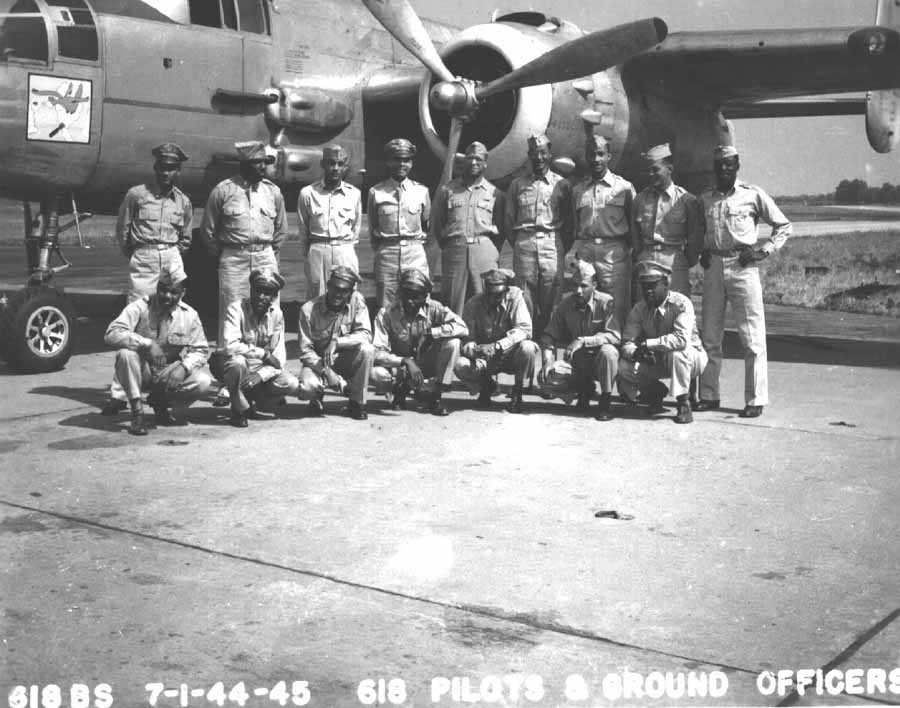


Recent Comments